WITHIN THE
EXISTING
ADAPTIVE REUSE
BUILDING WITHIN A BUILDING
ART LIBRARY
ACADEMIC
TRON KIRK · EDINBURGH
Within the Existing reimagines Edinburgh’s seventeenth-century Tron Kirk as a contemporary art library — new cultural infrastructure inhabiting a historic building without erasing the spatial and material memory embedded within it.
A found stage, and a new production installed inside it: everything added stands on its own structure, hangs from above, and could be struck without leaving a mark.
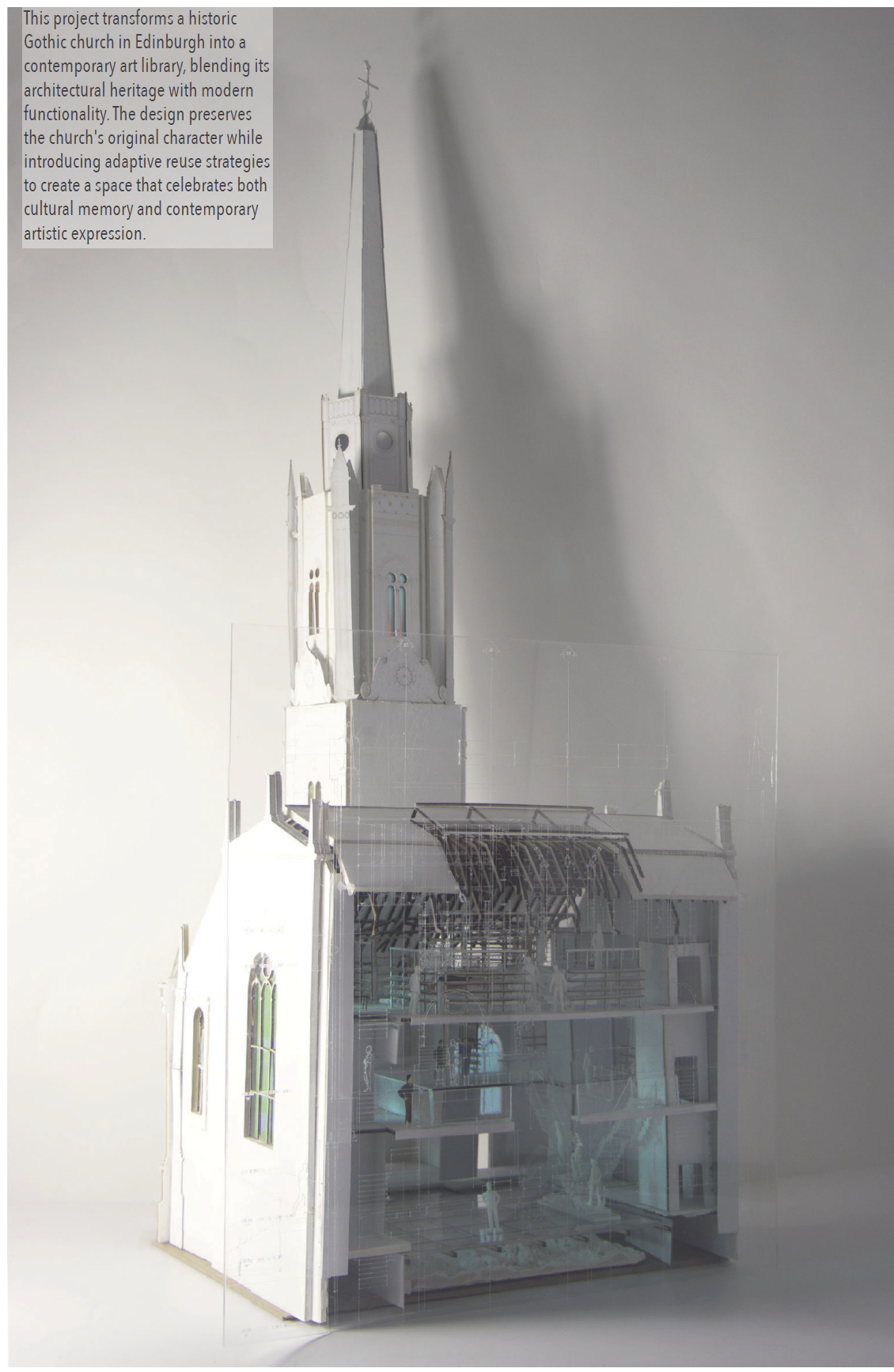
A MONUMENT AS A FOUND STAGE
Edinburgh's seventeenth-century Tron Kirk is approached less as a site to be converted than as a found stage — a monumental interior with four centuries of atmosphere already in place. Its masonry shell, arched windows, and timber roof are surveyed, protected, and kept fully visible.
Rather than subdividing the church into conventional floors, the design keeps the vertical void intact. The building's history is not a constraint to work around; it is the scenography the new institution performs against.
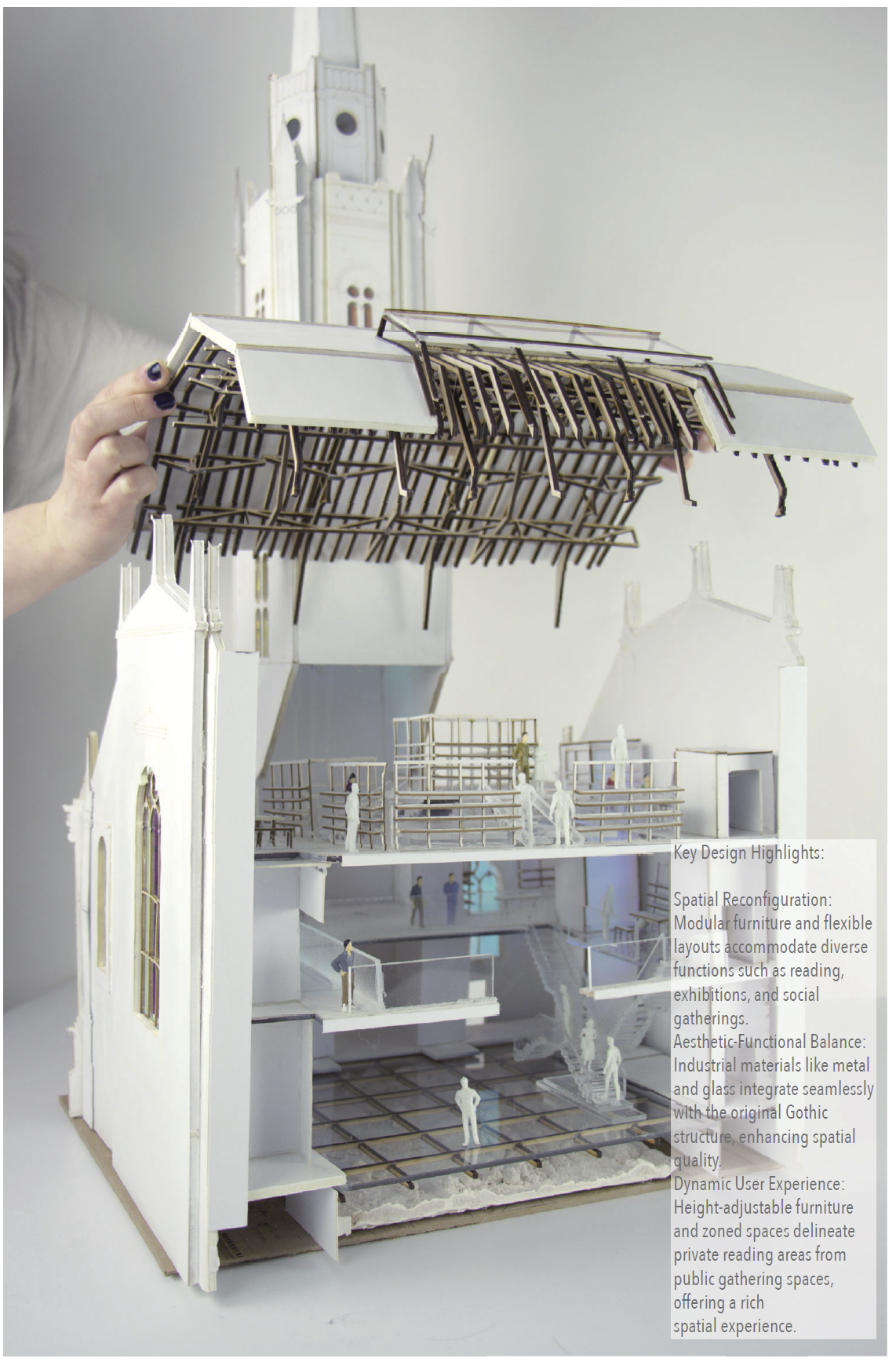
A BUILDING WITHIN A BUILDING
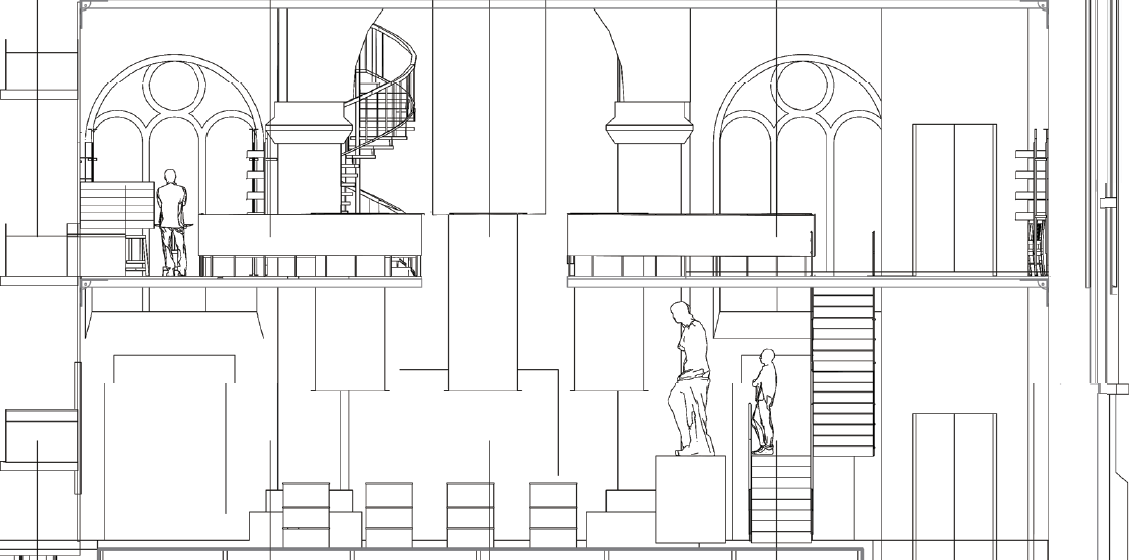
Inside the volume, an independent system of bookshelves, bridges, stairs, and reading platforms is introduced — a complete second building standing within the first, structurally and visually separate from the historic fabric.
Inspired by the spatial openness of Biblioteca Vasconcelos, books are treated not simply as contents placed inside architecture, but as elements that construct space itself. The library becomes a vertical landscape of knowledge: visitors move between books, artworks, archives, and elevated reading rooms while continuously perceiving the historic shell around them.
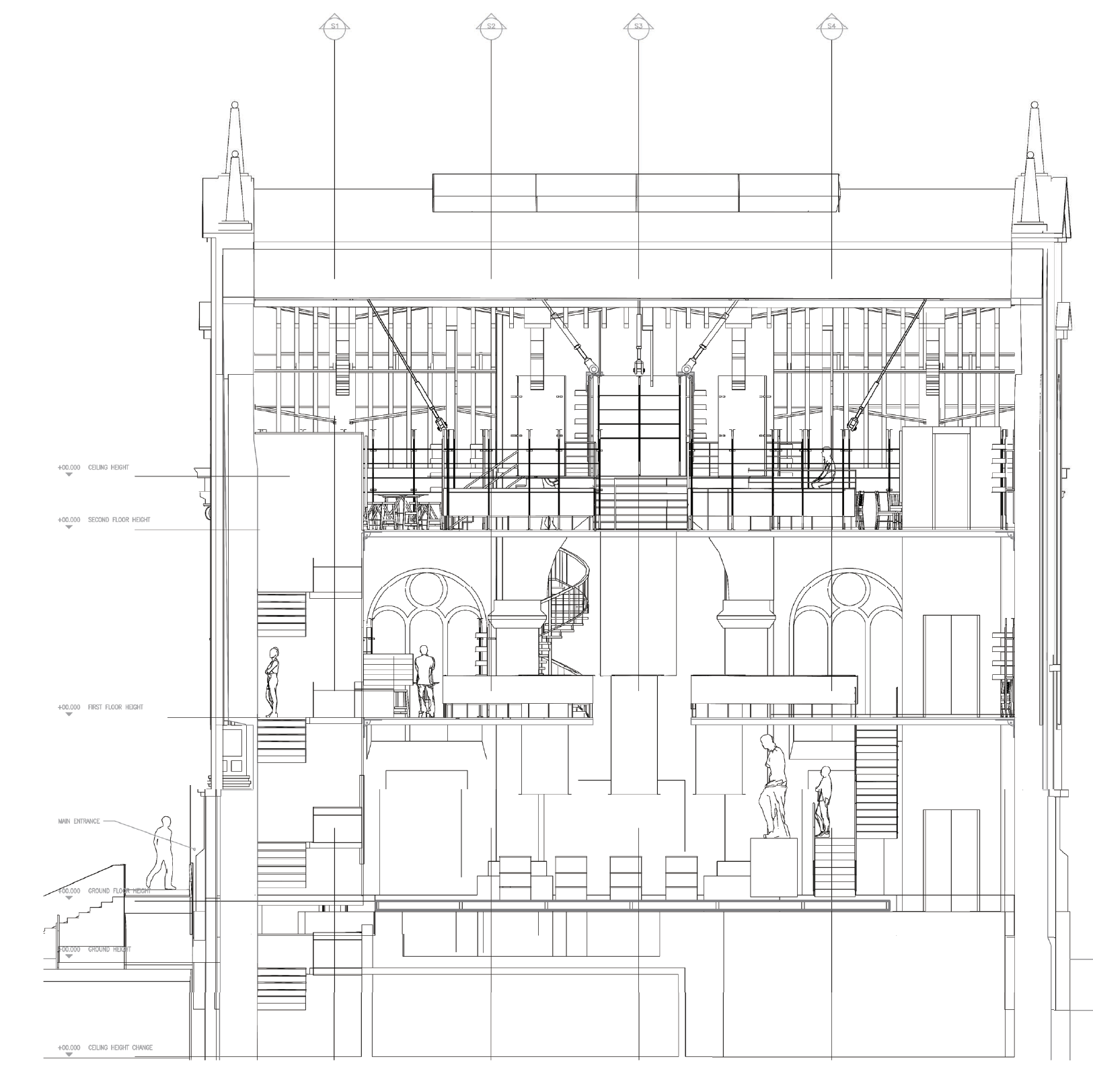
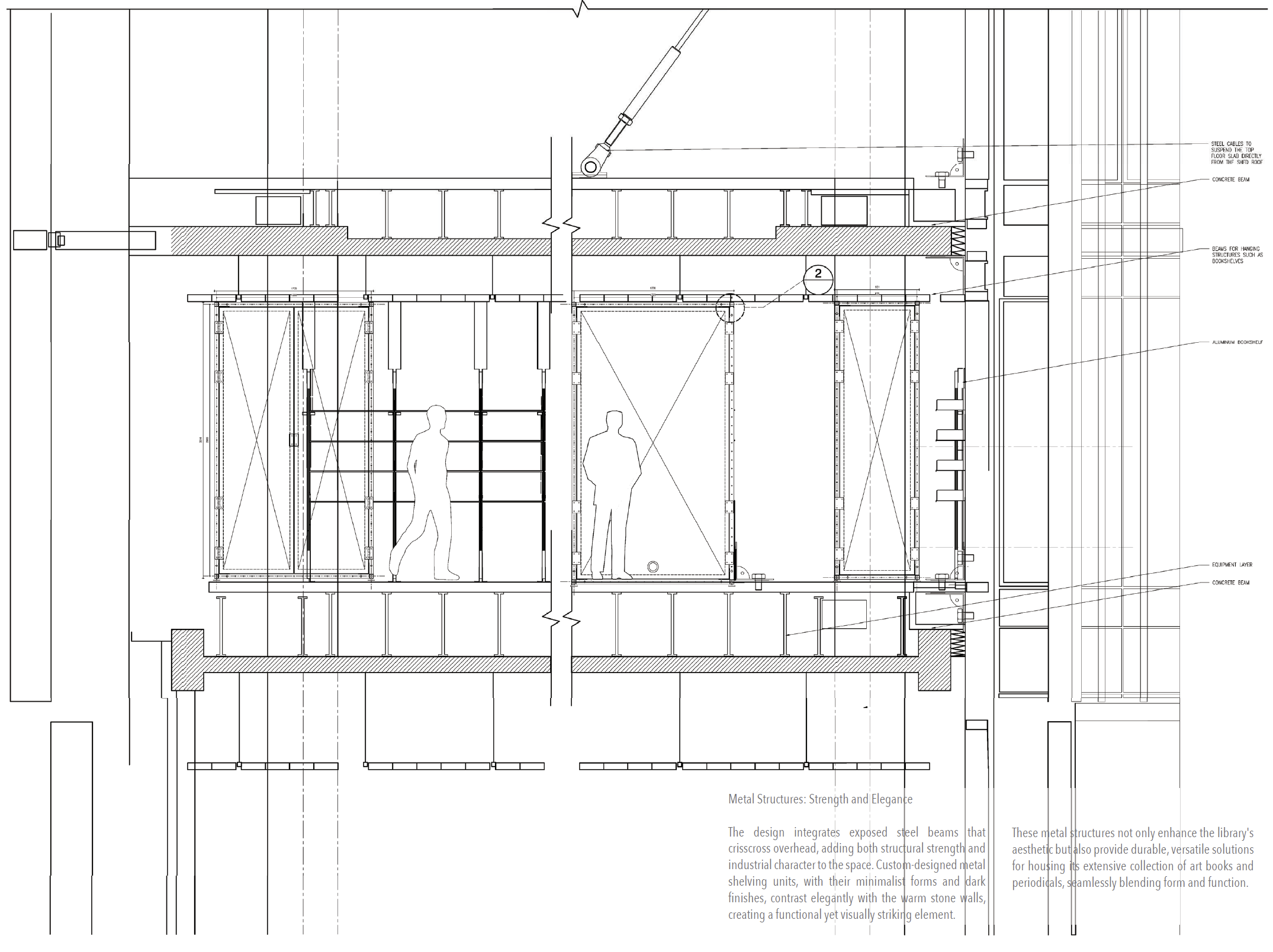
THE RIGGING: HUNG FROM ABOVE
The technical logic is theatrical rigging. The top floor is suspended on steel cables directly from the roof structure; beams above the platforms carry hanging bookshelves; an equipment layer runs beneath each deck. Loads are taken from above, so the historic floor and walls stay untouched.
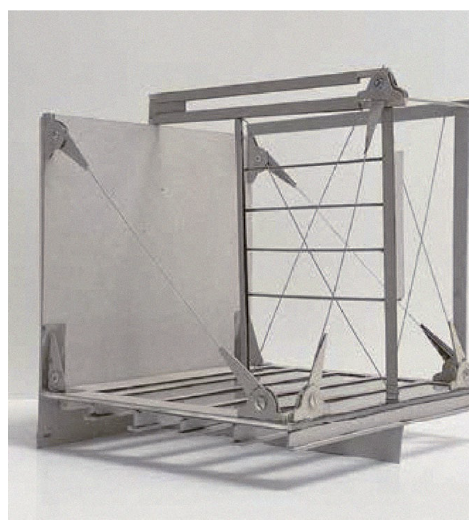
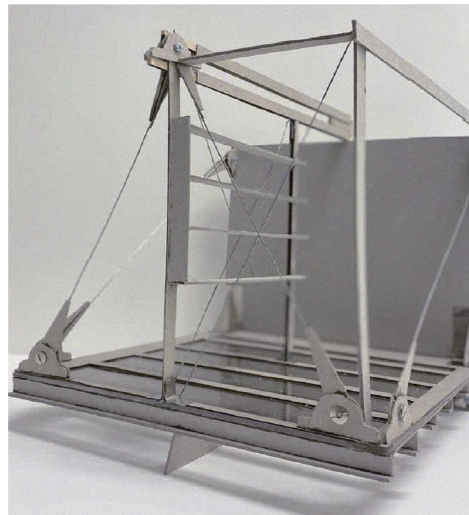
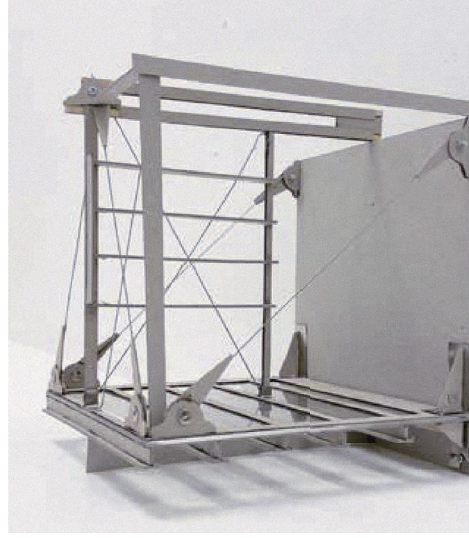
The shelving itself is a modular kit of parts — light frames, tension cables, and folding panels — developed through physical working models. Each unit can be assembled, reconfigured, and struck like a piece of scenery.
COEXISTENCE, NOT REPLACEMENT
The intervention deliberately contrasts the permanence and weight of the existing masonry with the lightness of the contemporary structure. Old and new remain visually distinct: one carries the accumulated history of the building, while the other introduces new forms of occupation and public life.
Through this building-within-a-building strategy, adaptive reuse shifts from an act of replacement to one of coexistence — preserving the monumental void of the former church while allowing a new cultural institution to grow within it.
THE MONUMENT
REMAINS.
A NEW WORLD
MOVES IN.
On paper, an art library. In method, production design — a full build installed inside a heritage venue without touching it.
HERITAGE & FOUND VENUES
Self-supporting, reversible structures inside protected shells — churches, theatres, warehouses, and landmark venues where nothing may be fixed to the fabric.
FLYING & RIGGING LOGIC
Floors and shelving flown on steel cables from the roof, services hidden in equipment layers — the same thinking as flown scenery and truss in venues with no floor loading to spare.
A KIT OF PARTS THAT TOURS
Repeatable modules developed as physical working models: fabricate off-site, assemble fast, reconfigure per venue, strike clean.