IN THE
WIND
SET DESIGN
SPATIAL ENVIRONMENT
EXPERIENTIAL DESIGN
TAI MEI TUK · HONG KONG
ADAPTIVE REUSE
STUDIO PROJECT · 2023
DESIGN: EFFA LU
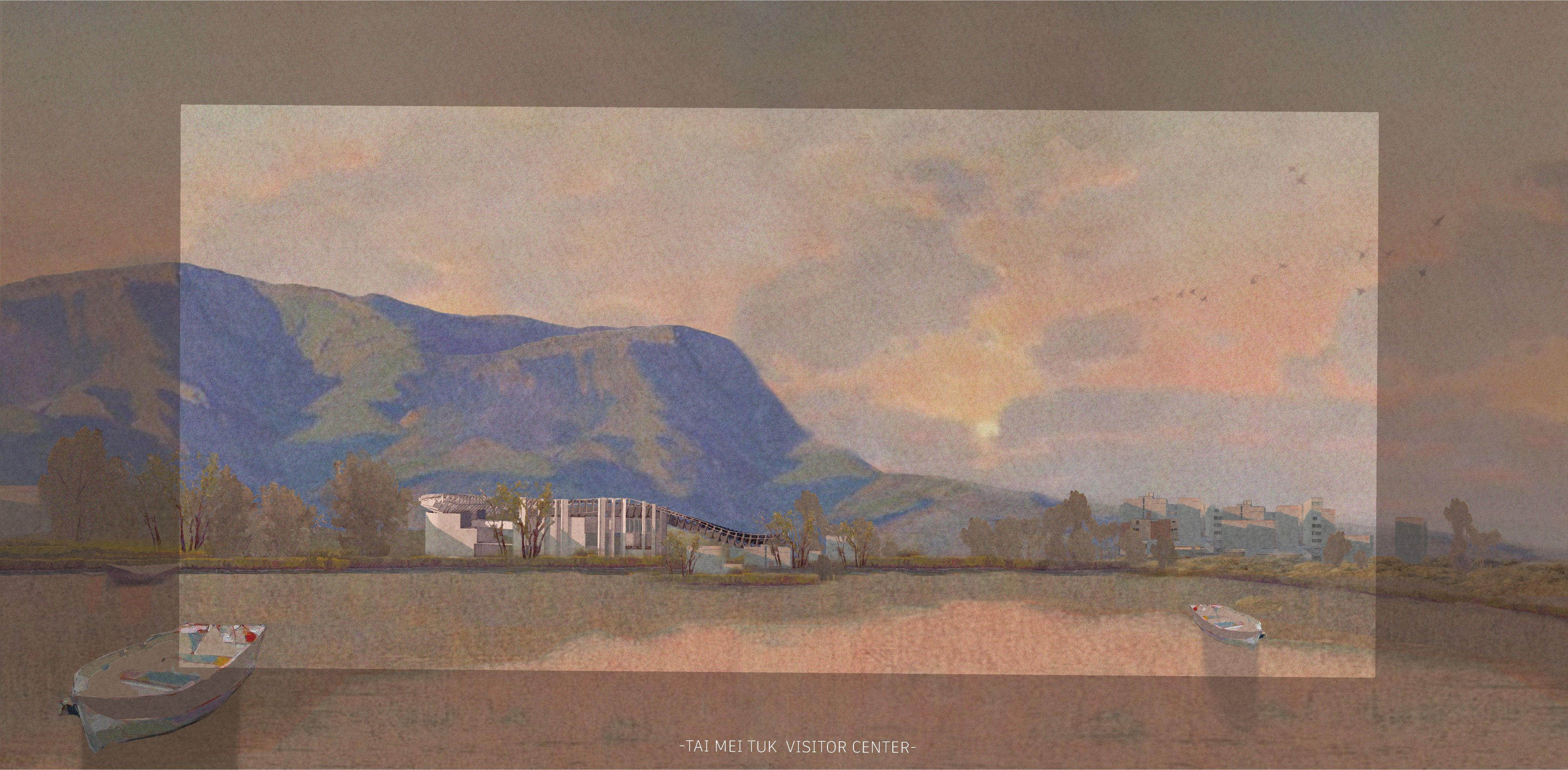
A spatial environment shaped by an invisible performer: wind.
Set between mountain and sea in Tai Mei Tuk, Hong Kong, In the Wind reimagines an existing structure as an immersive environment organized around airflow, movement, and shifting views — wind brought into the foreground, as both a material and an active performer within the space.
CASTING THE WIND
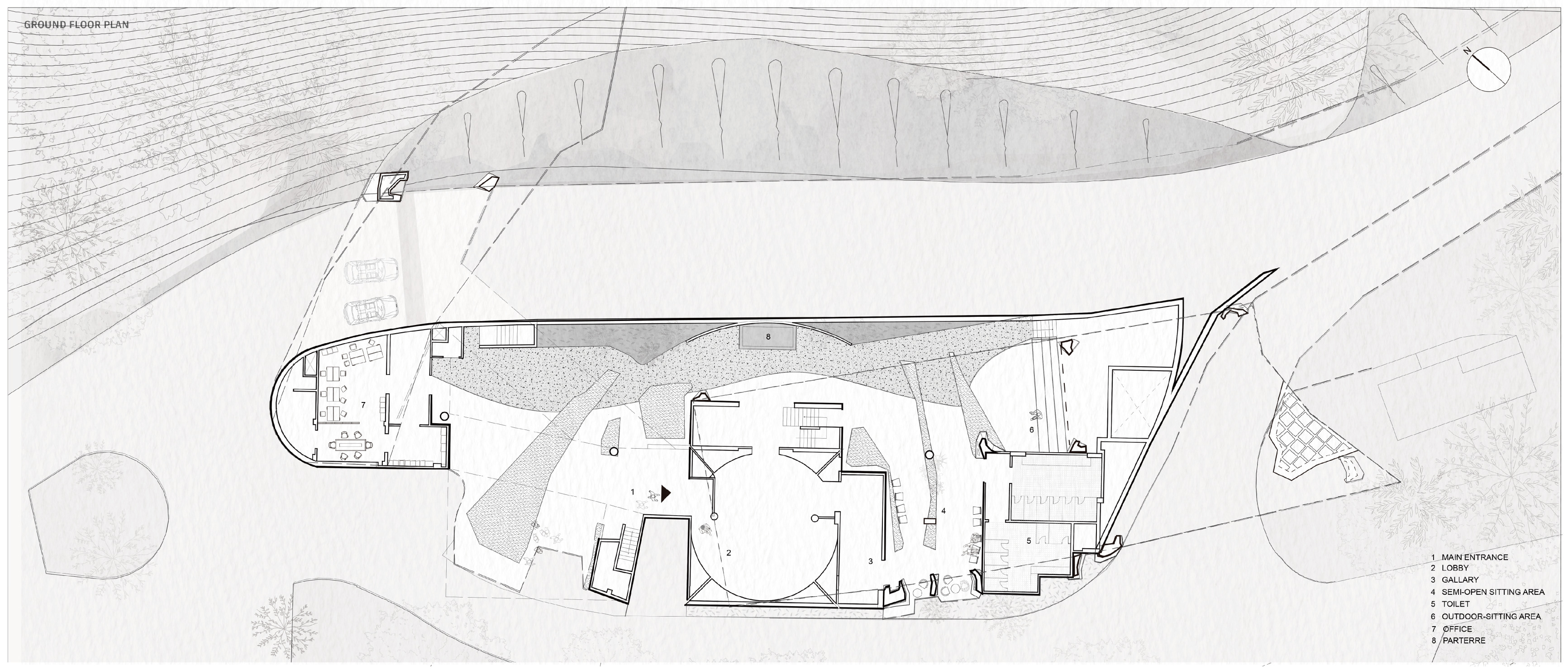
The existing building is opened and reorganized into two interconnected wings beneath a pair of extended roof structures. As the geometry narrows between them, prevailing winds are captured and accelerated through a Venturi effect.
A kinetic façade responds directly to this airflow, translating an invisible environmental force into visible movement and giving the architecture a constantly changing surface.
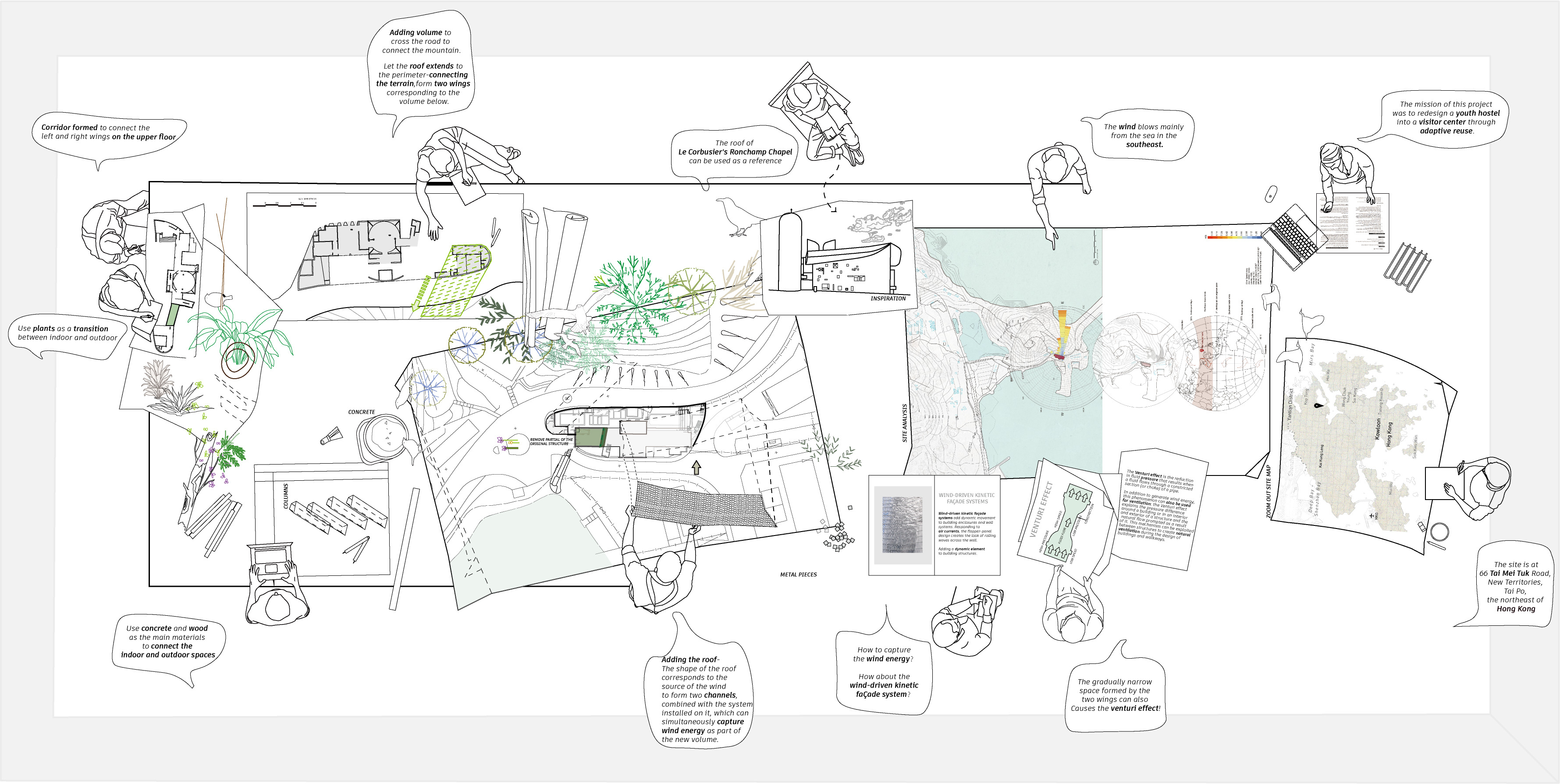
THE VISITOR JOURNEY
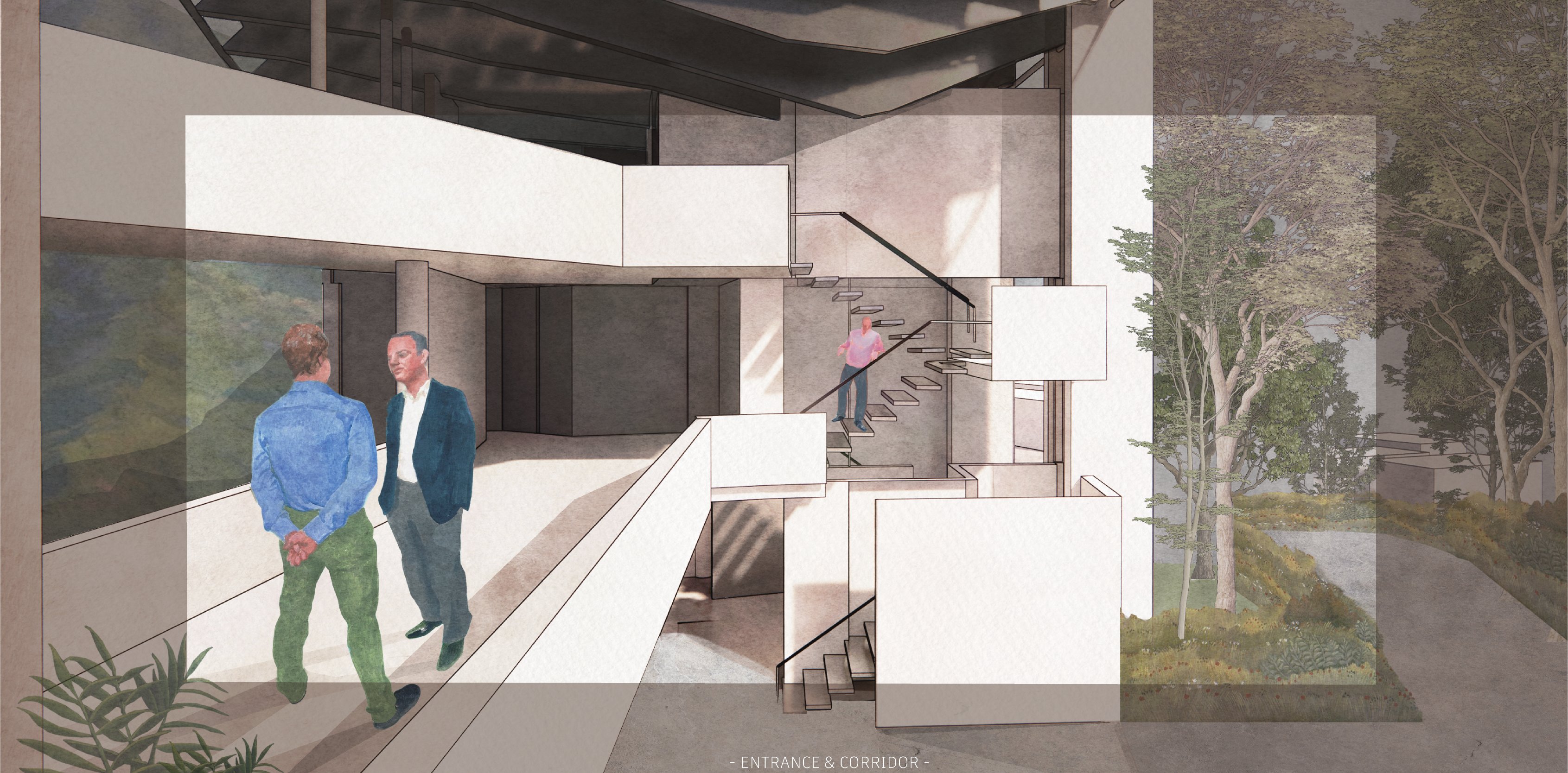
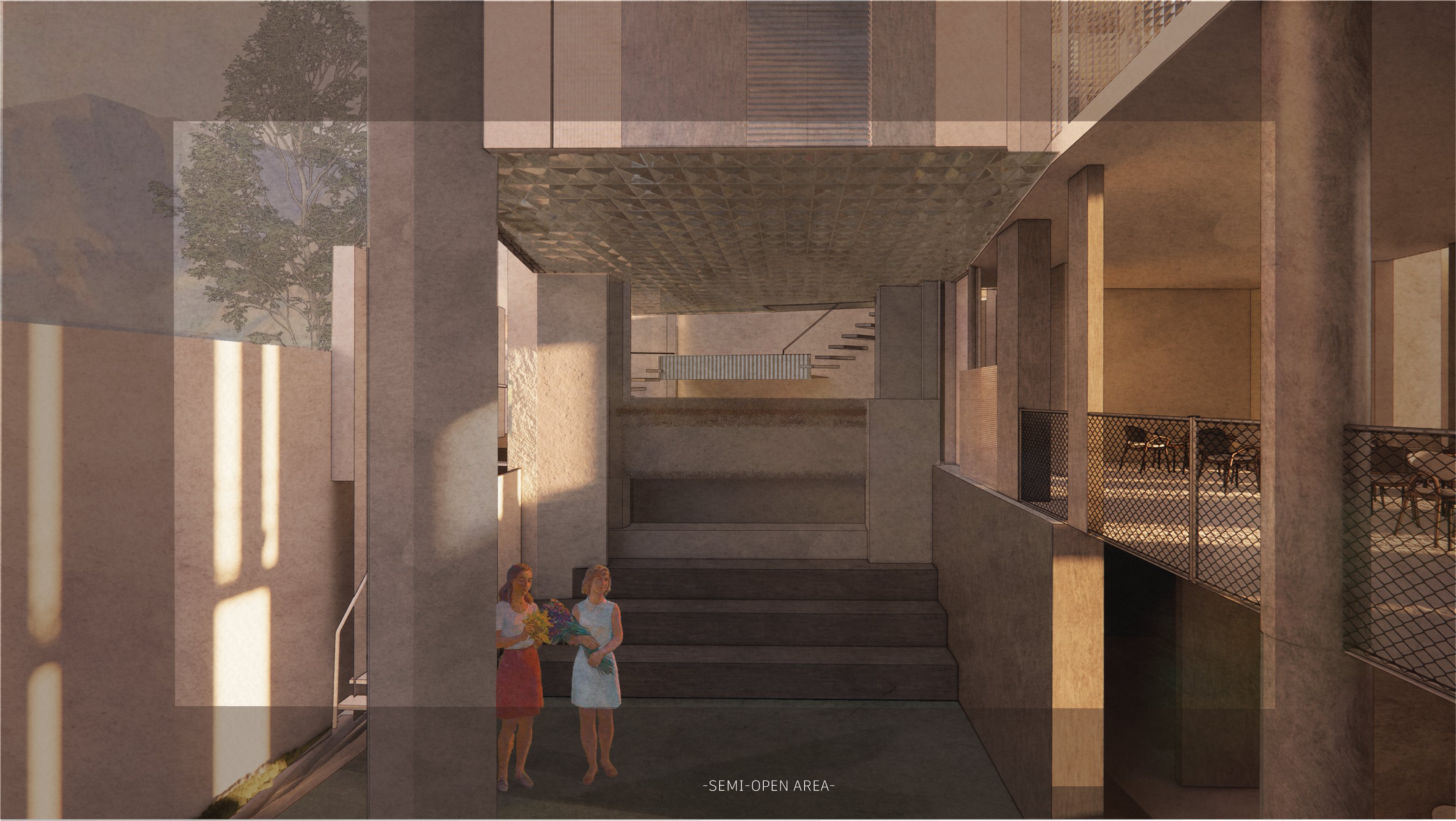
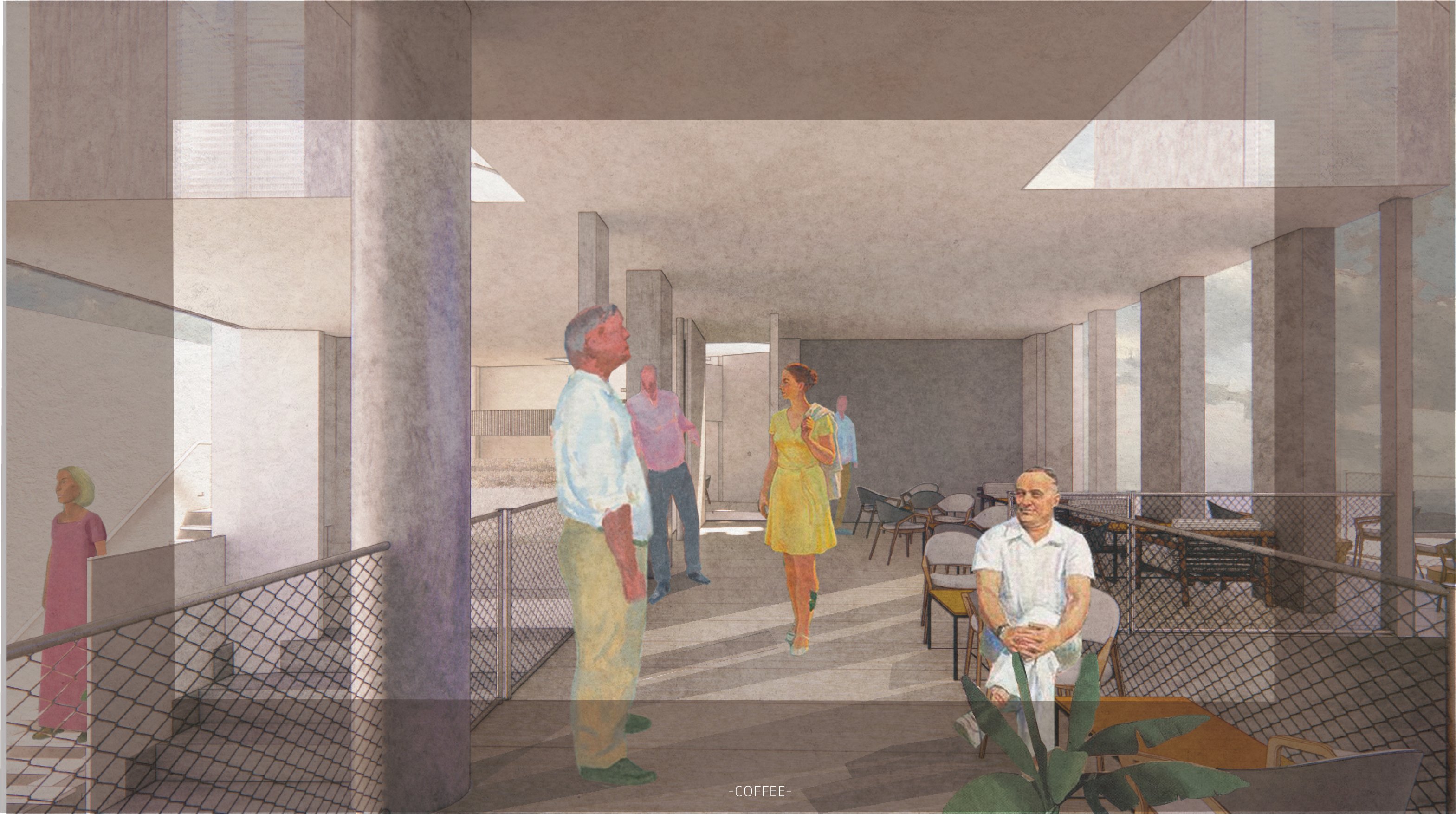
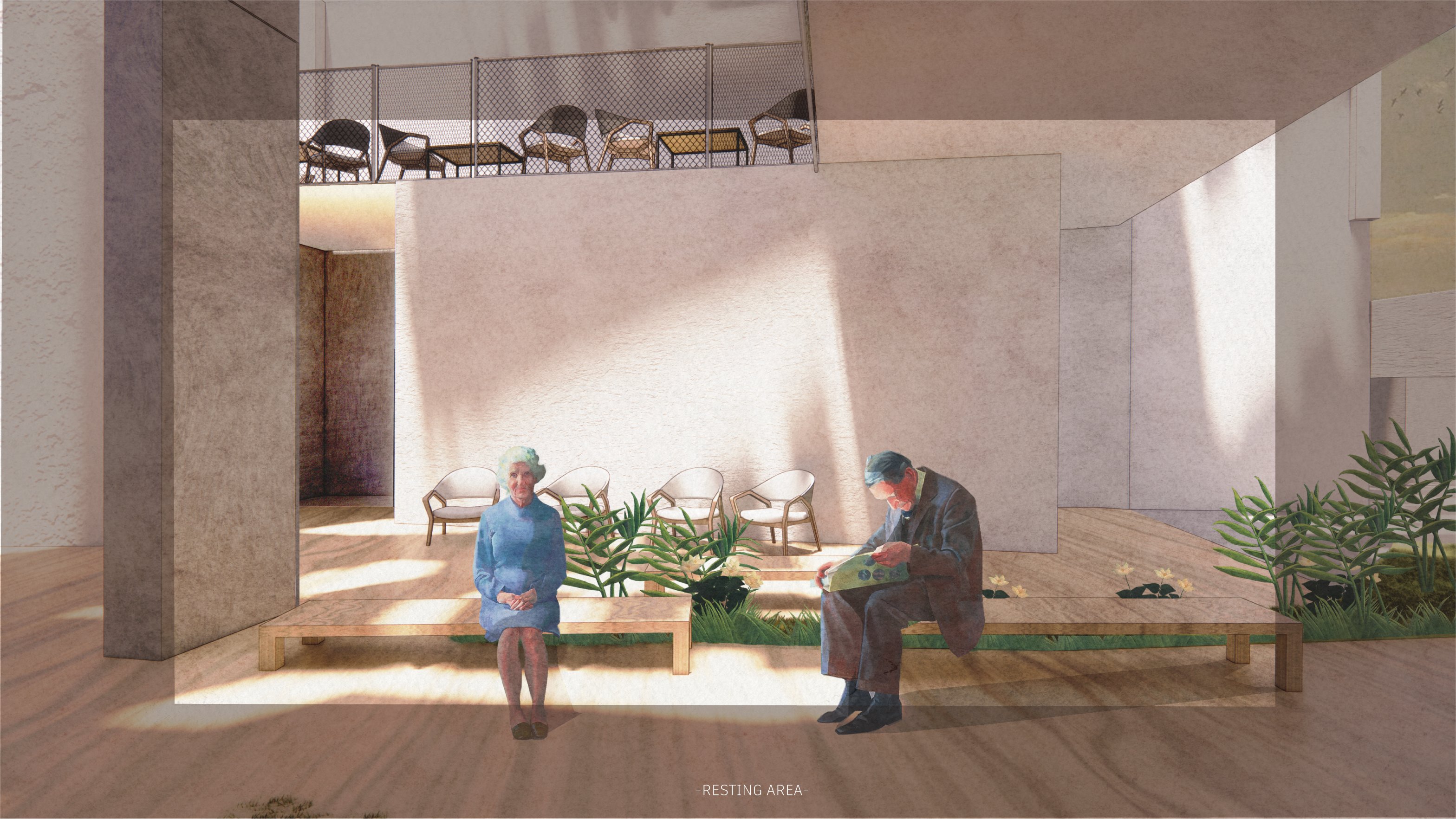
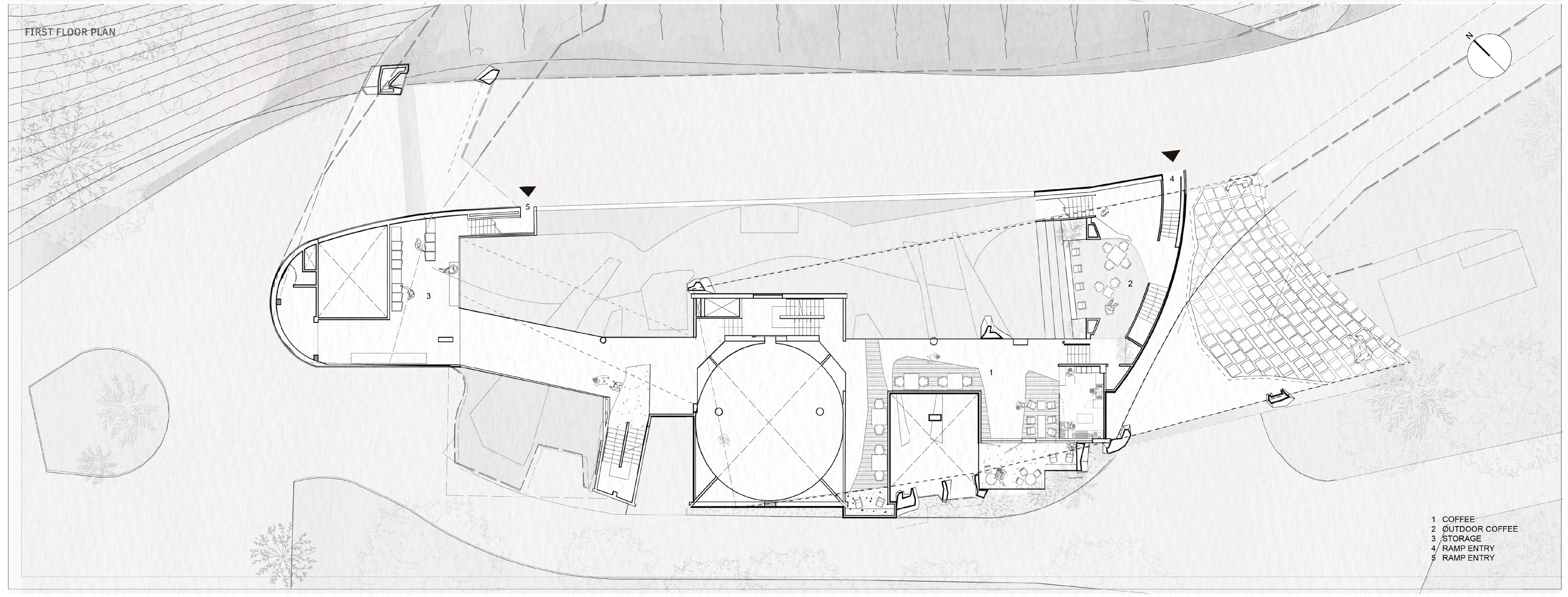
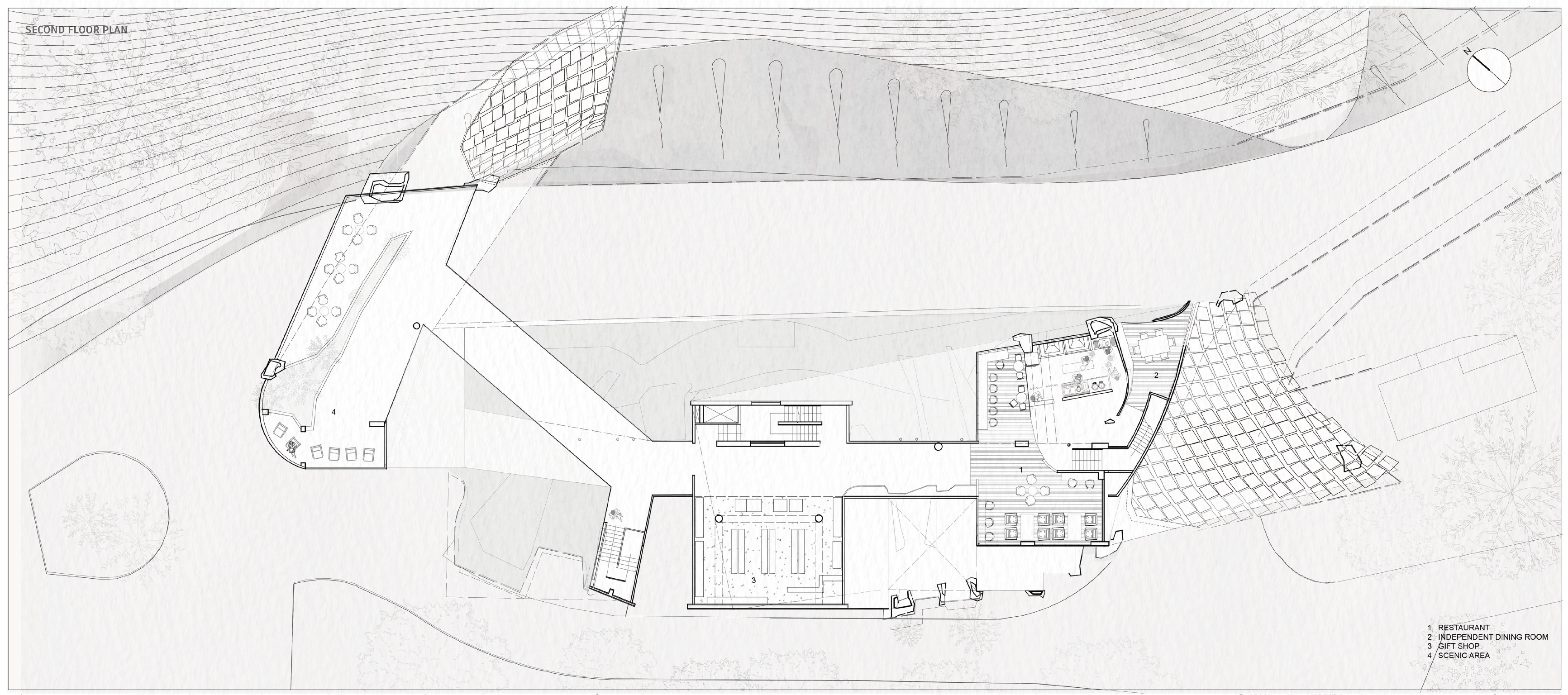
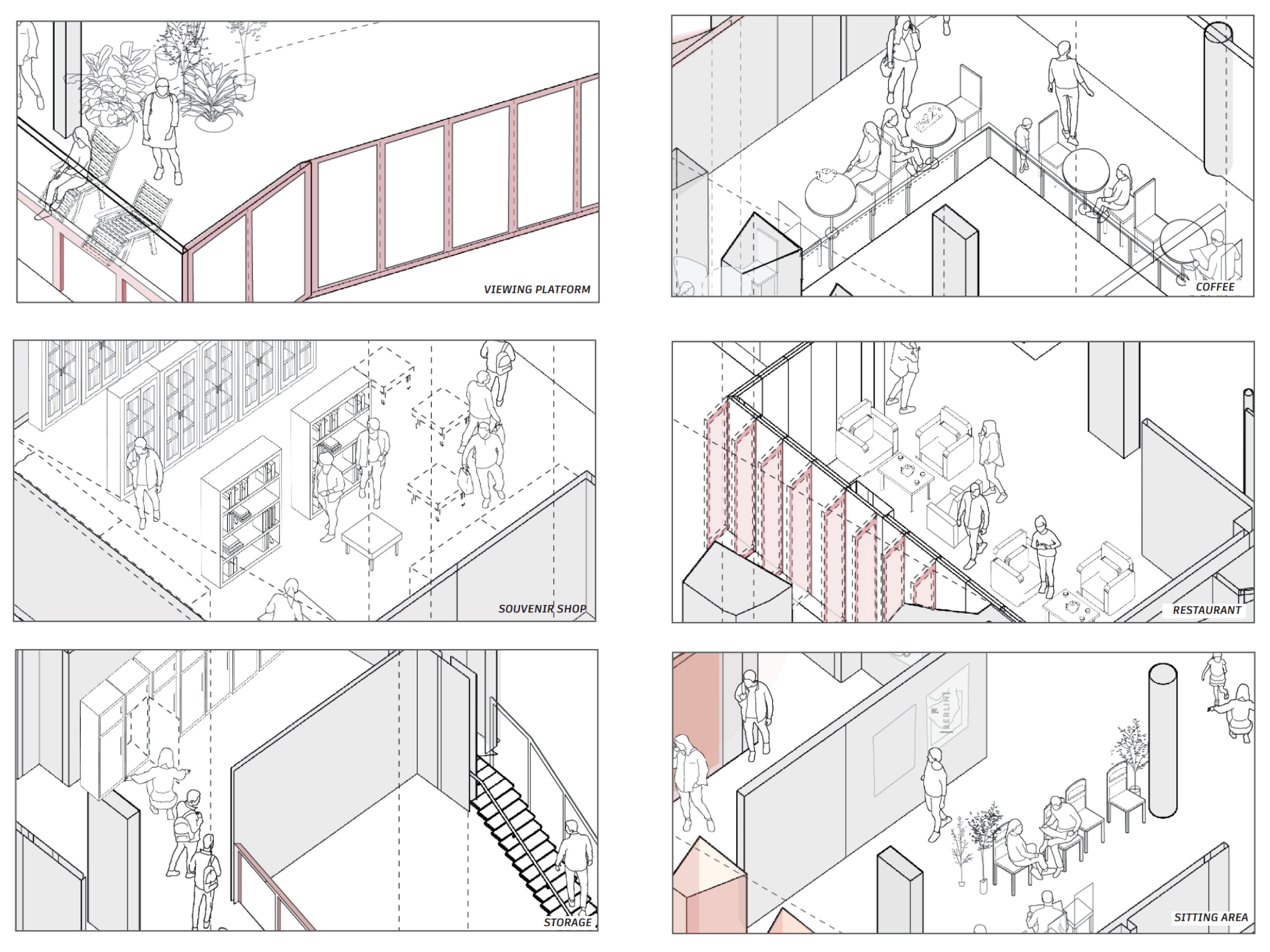
The visitor's movement unfolds alongside this system. Corridors shift between the two wings, semi-open rooms dissolve into the surrounding landscape, and viewing platforms extend outward toward the mountain and sea.
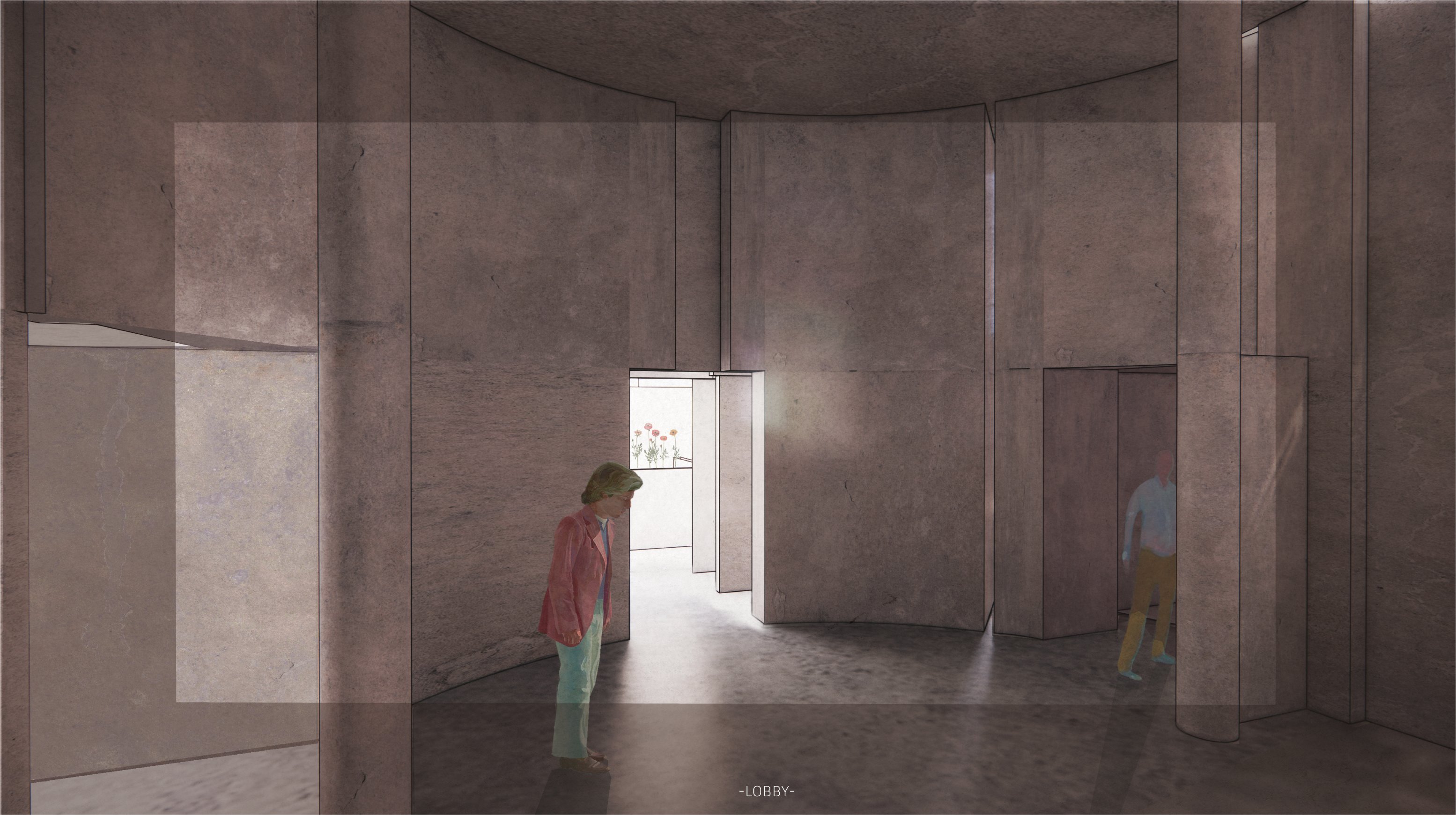
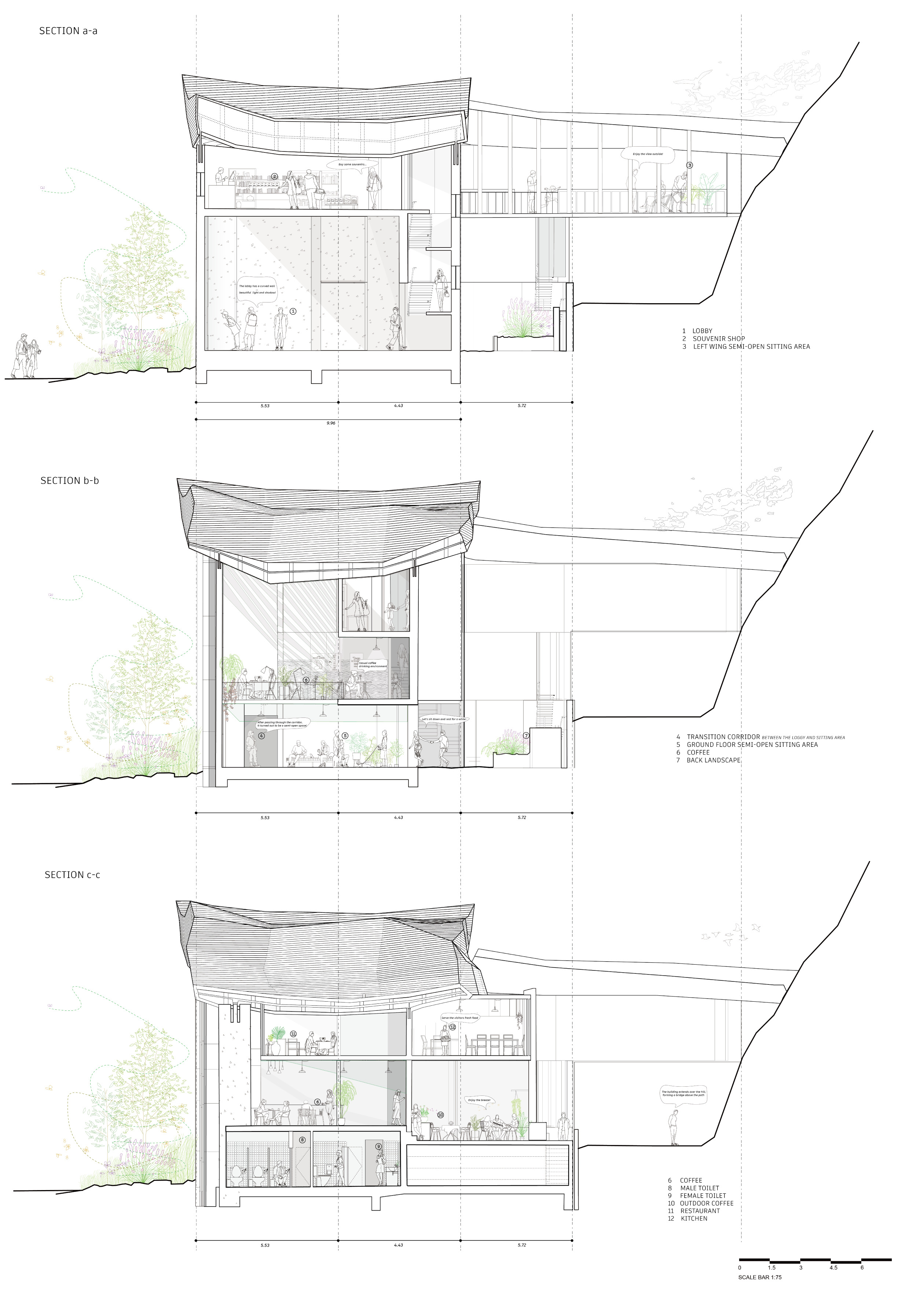
Moments of compression open into larger spaces; enclosed interiors transition into exposed thresholds; movement alternates with pause, framing a sequence of changing atmospheres rather than a single static view. The design connects the double-height lobby, semi-open lounge, viewing spaces, restaurant and circulation into one continuous spatial sequence.
HEARD, FELT, SEEN
Throughout the journey, wind can be heard, felt, and seen through the movement of the façade. At corridors and viewing platforms in particular, the building intensifies the sensation of moving through the wind, turning an environmental phenomenon into part of the visitor's physical experience.
BACKSTAGE: THE TECHNICAL SCORE
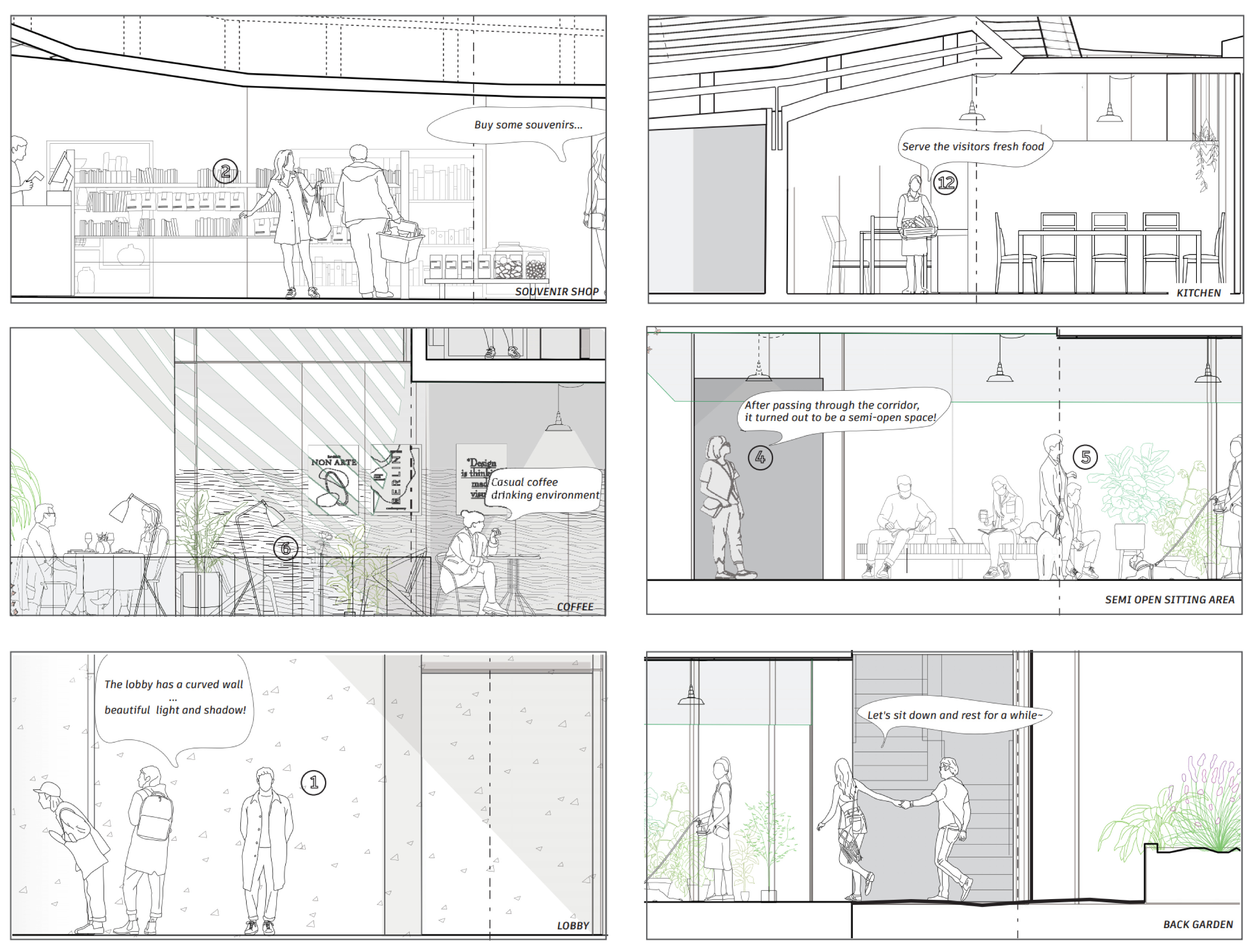
Rather than constructing an entirely new object, the intervention works through selective removal, extension, and transformation of the existing structure. New elements reach toward the surrounding terrain while vegetation, material transitions, and open thresholds blur the boundary between constructed space and landscape.
A LIVING SET
The result is a space that behaves less like a fixed backdrop and more like a living set — one activated continuously by environment, movement, and human presence.
This is the same method I bring to stages and sets: cast the environment as a performer, choreograph the audience as part of the show, and carry the idea from first sketch to drawings precise enough to build. Here the performer was the wind; for a film, a concert, or a world tour, it might be light, sound, or story.
LESS A FIXED
BACKDROP.
MORE A LIVING SET,
PLAYED BY THE WIND.