MEMENTO
EXPERIMENTAL SPACE
SPATIAL EXPERIENCE
BORDER
ACADEMIC
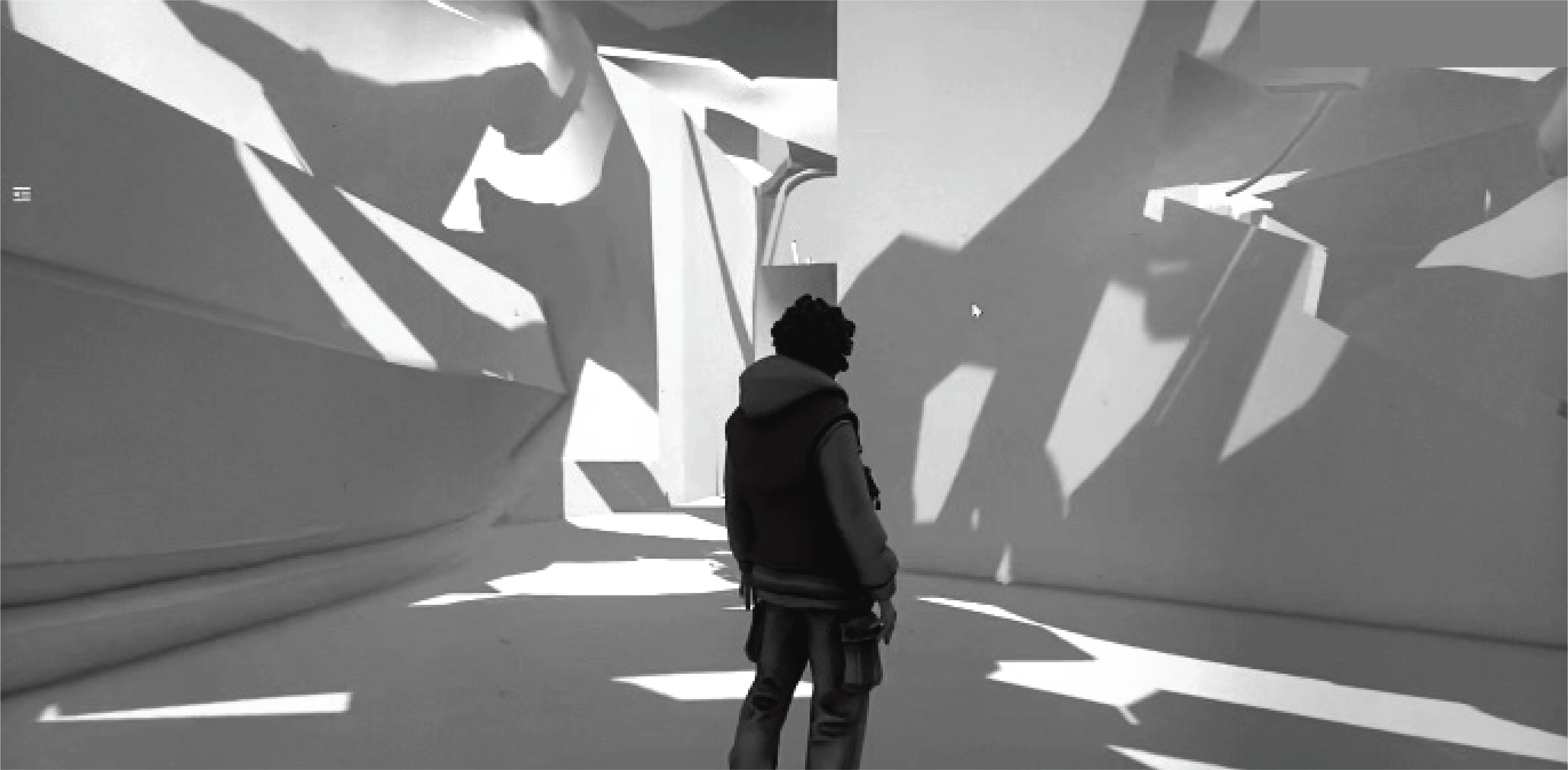
Reconstructing the boundary as a spatial archive of movement, time, and memory.
Memento explores how boundaries can hold memory, time, and human experience. Situated between Lin Ma Hang in Hong Kong and Chang Ling in Shenzhen, the project originates from a personal encounter with the border through four layers of barbed wire — a physical separation between two cities, but also a place of looking, waiting, and connection.
Rather than treating the wall as a fixed line of division, the project asks how a boundary might become a space itself: one that separates and connects, conceals and reveals, and accumulates human experience over time.
SPATIAL COMPLEXITY
DECONSTRUCTION / RECONSTRUCTION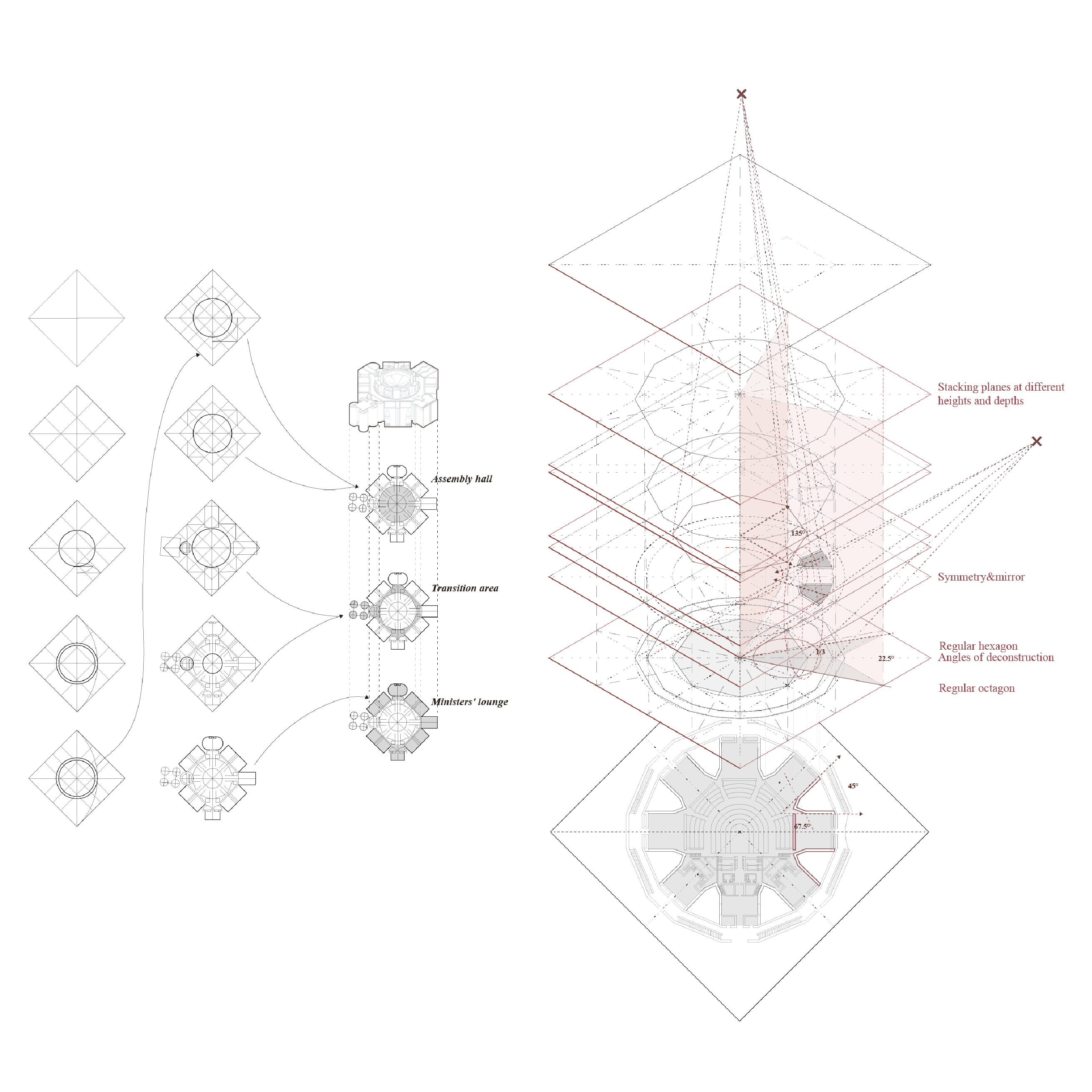
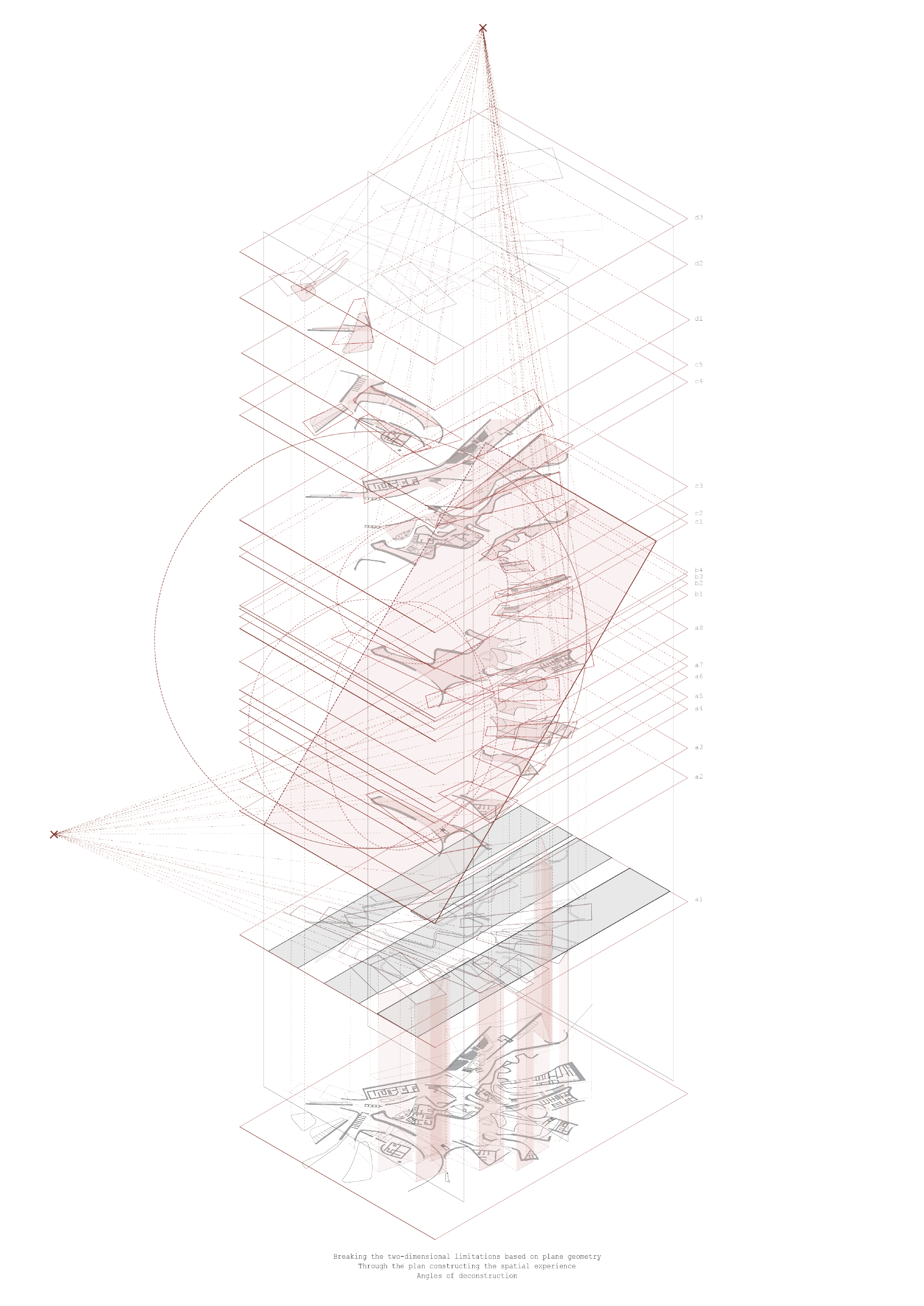
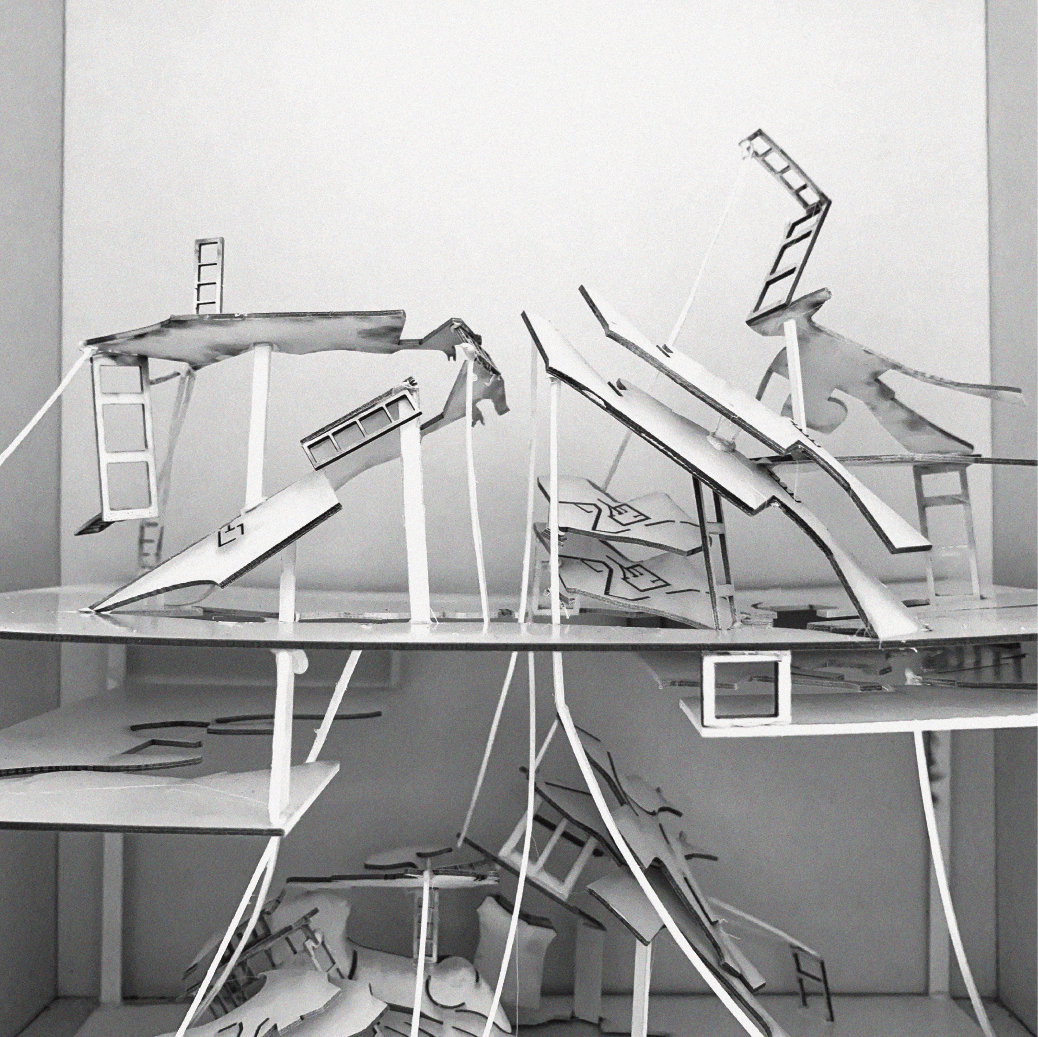
The project begins with an investigation into spatial complexity: how space is produced not only through form, but through movement, events, fragmentation, and changing perception.
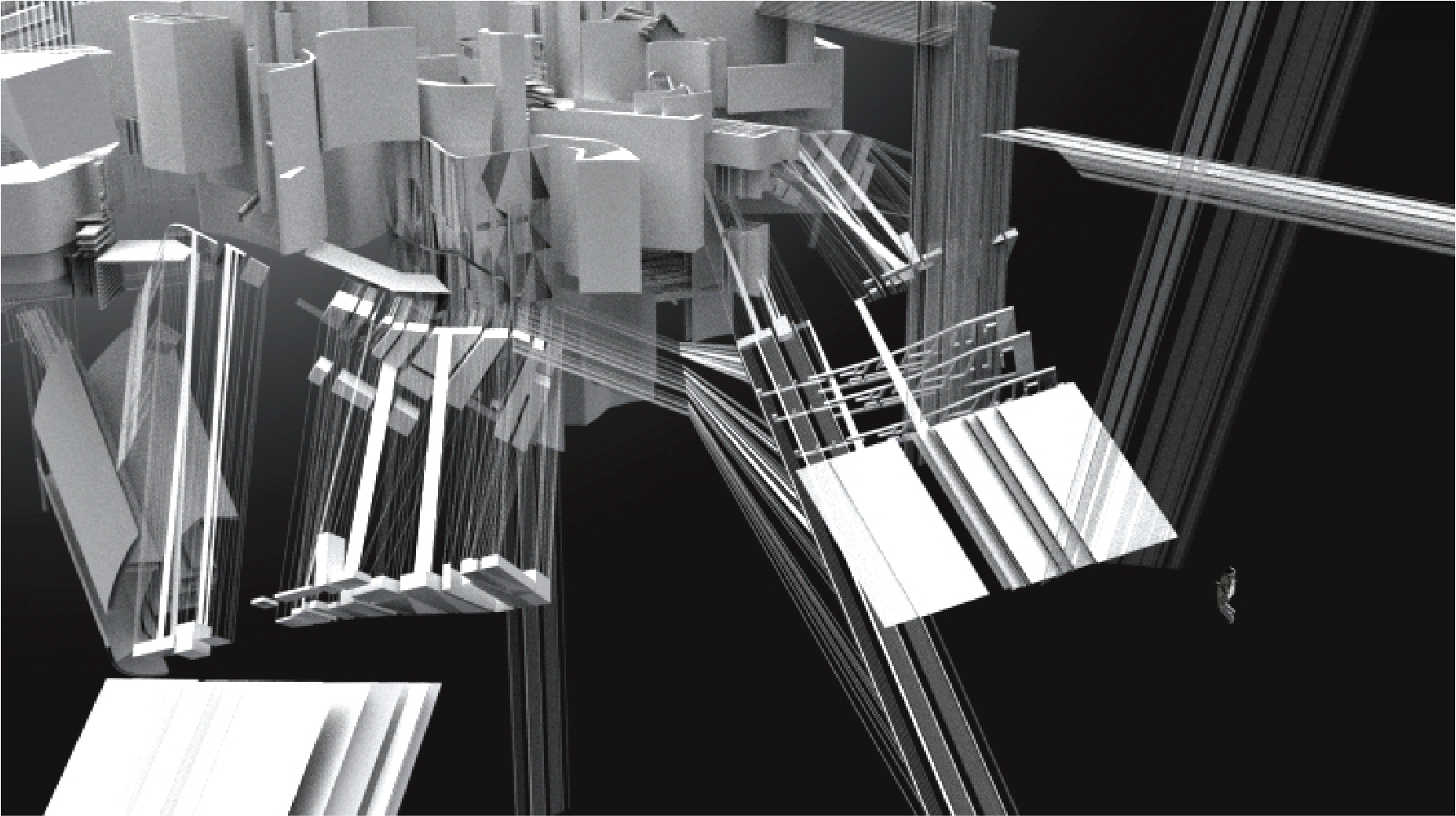
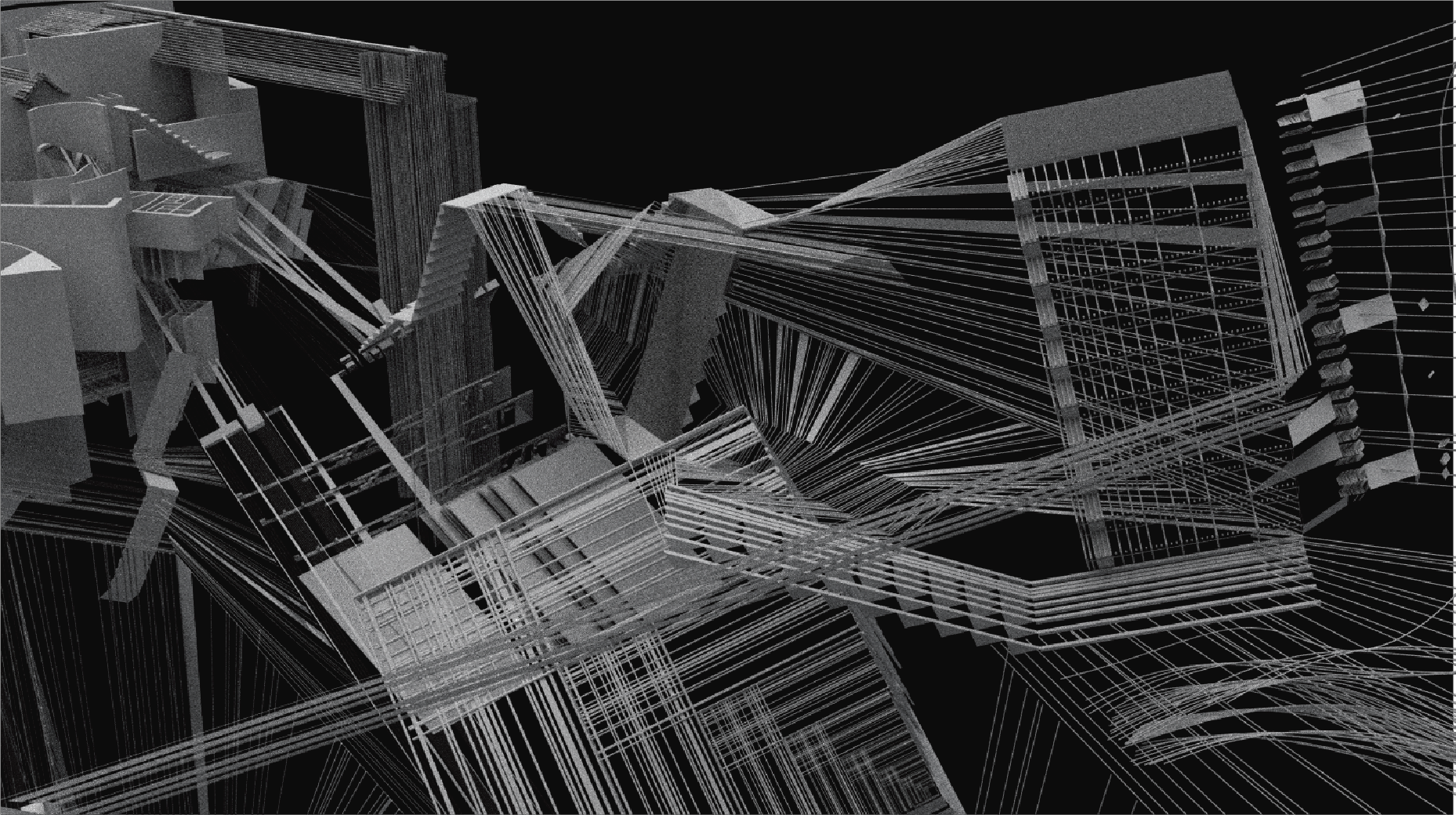
Through deconstruction and reconstruction, conventional spatial elements are broken apart, displaced, overlapped, and reorganized. Space is understood as a sequence of relationships rather than a fixed composition.
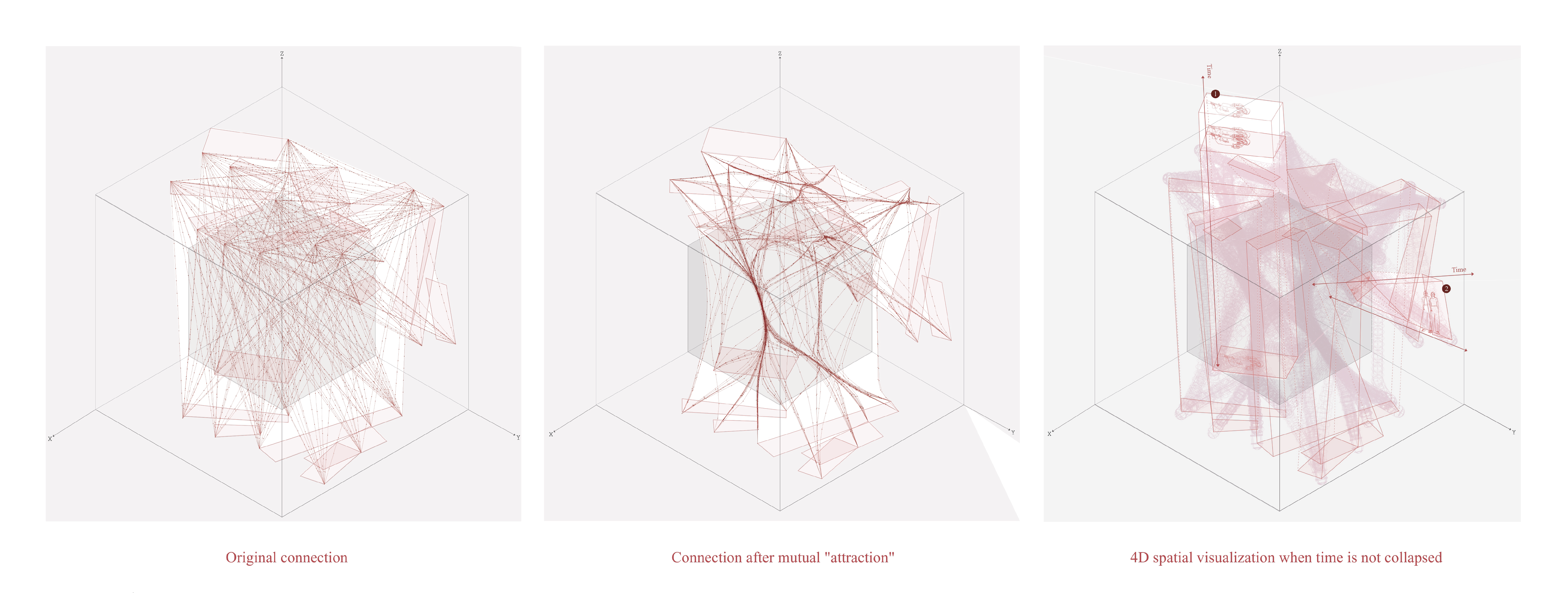
FROM LINE TO SPACE
WALL / MOVEMENT / EVENT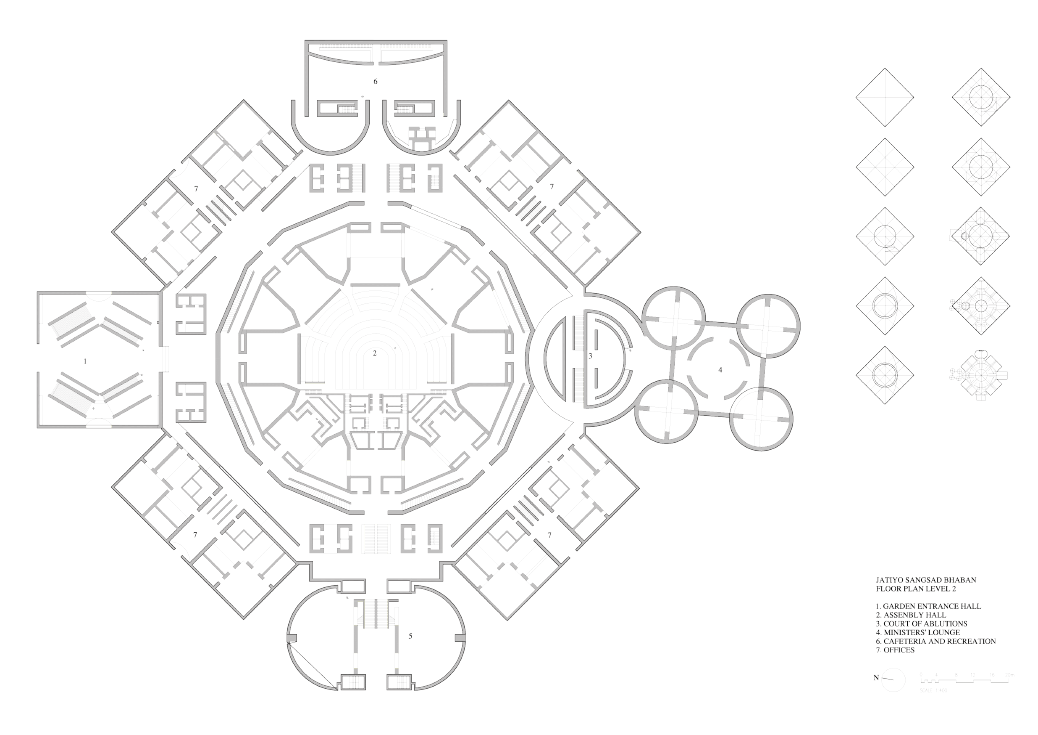
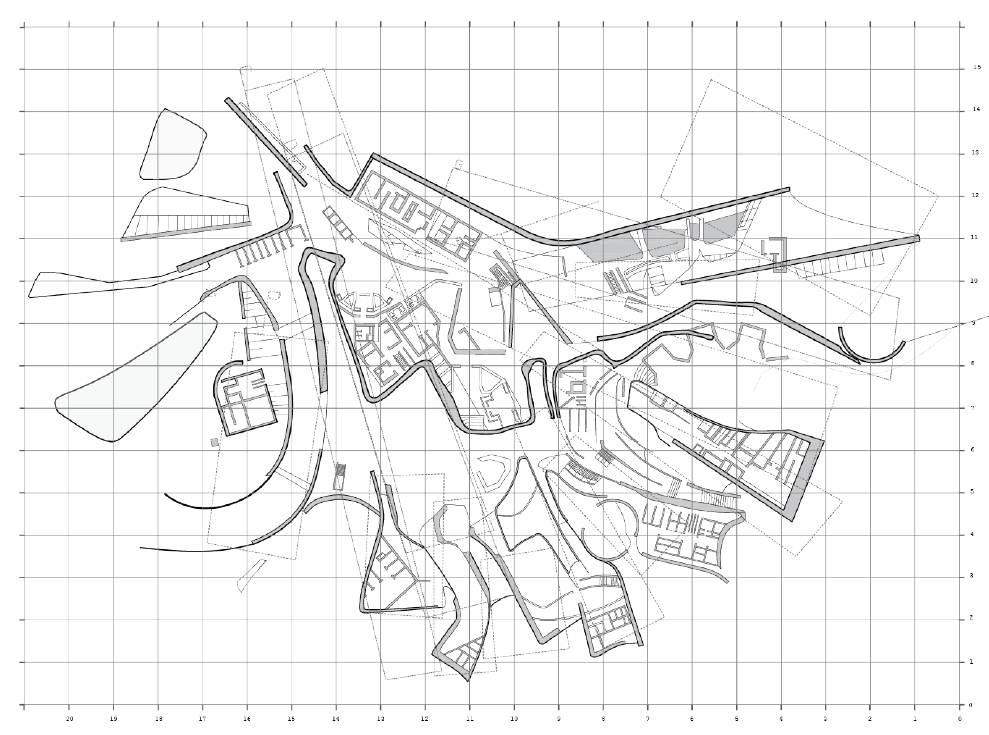
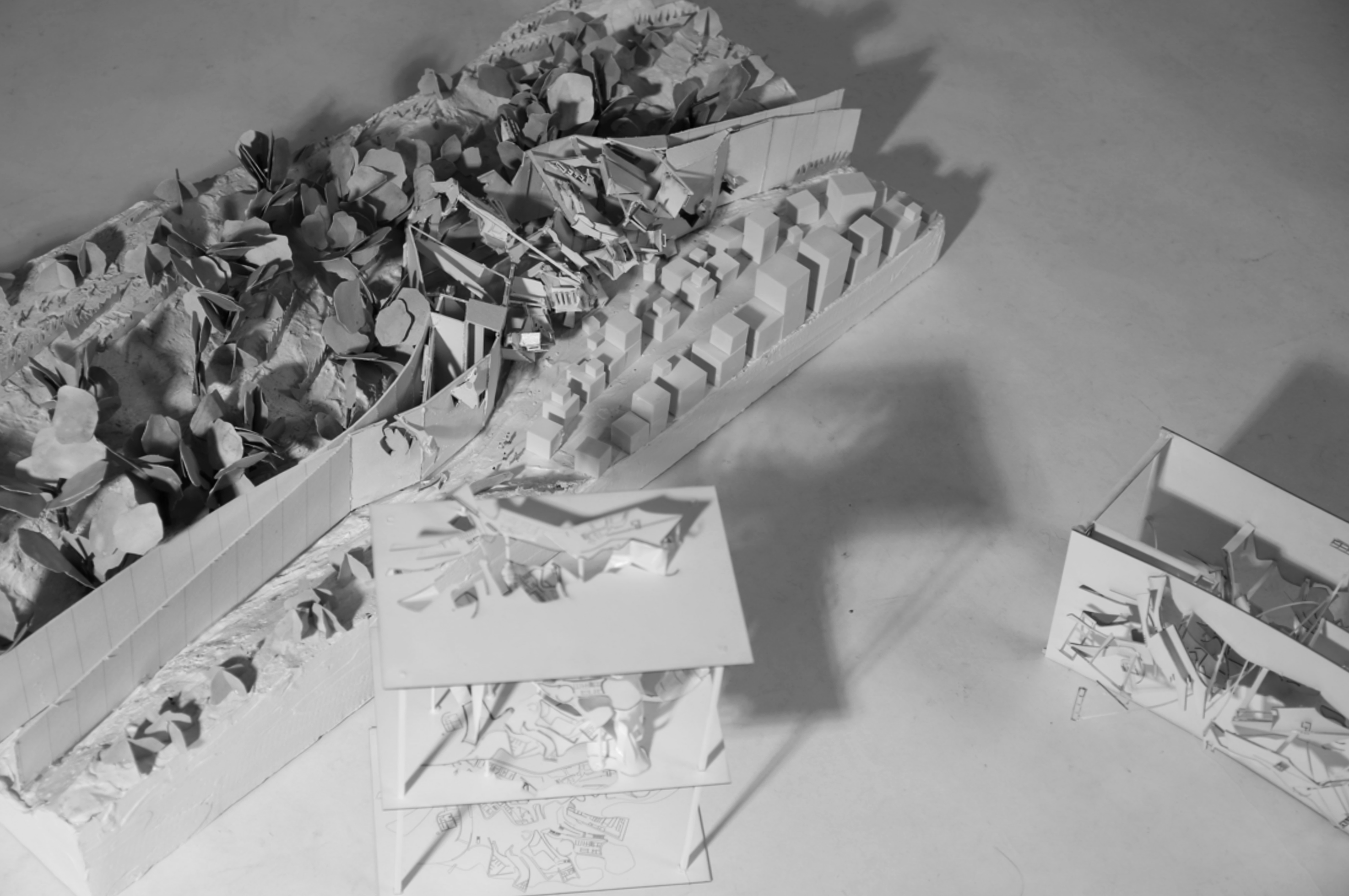
The investigation gradually shifts toward the wall. Conventionally understood as a line separating one condition from another, the wall is reconstructed as an inhabitable spatial system.
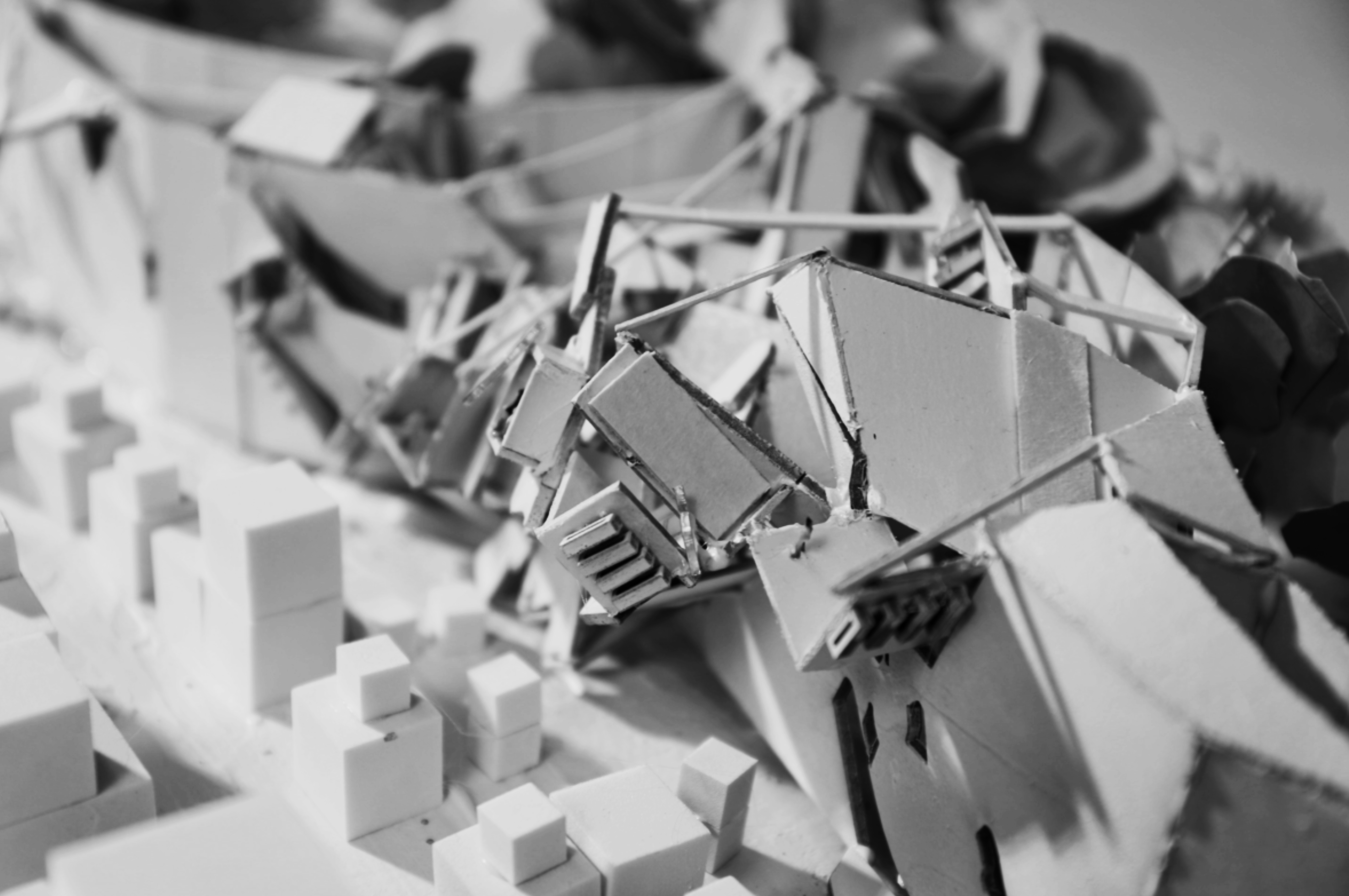
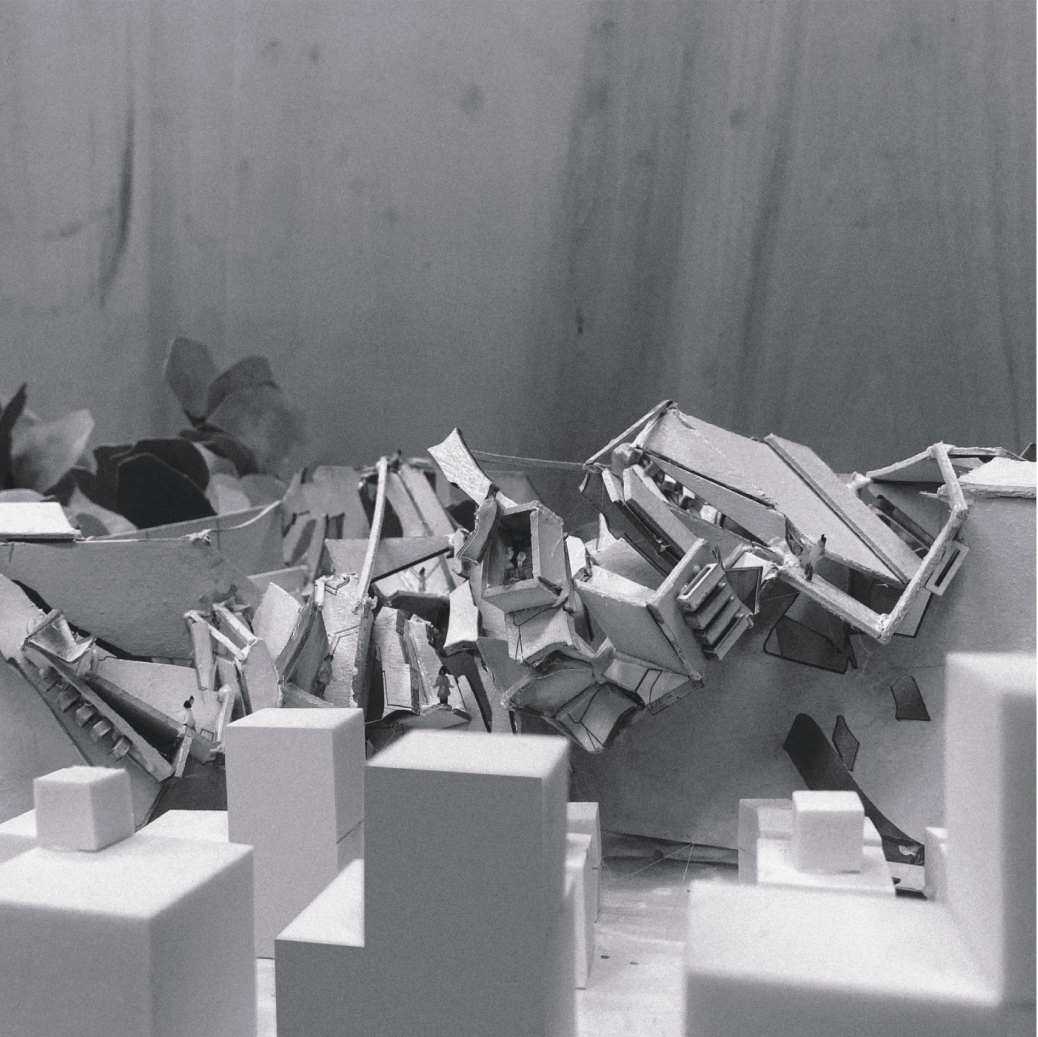
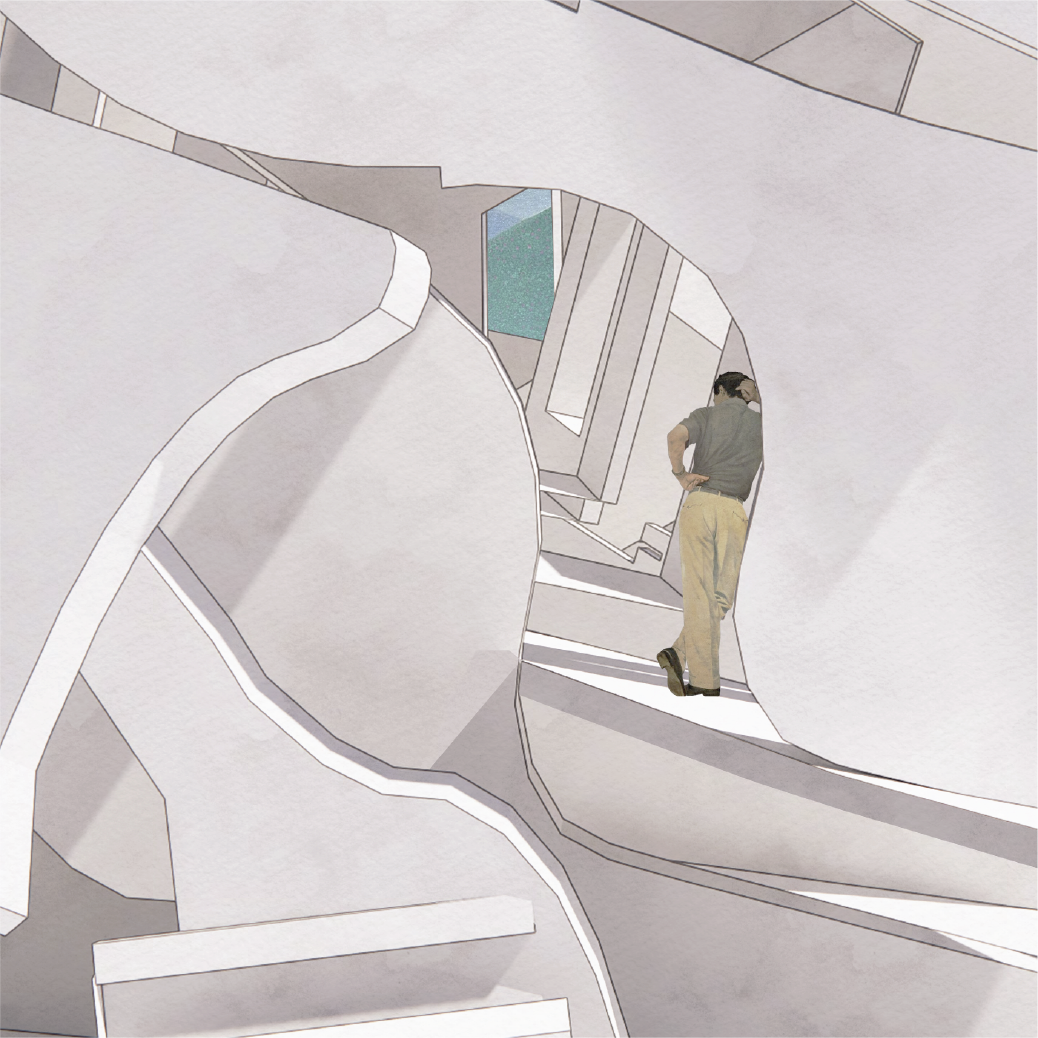
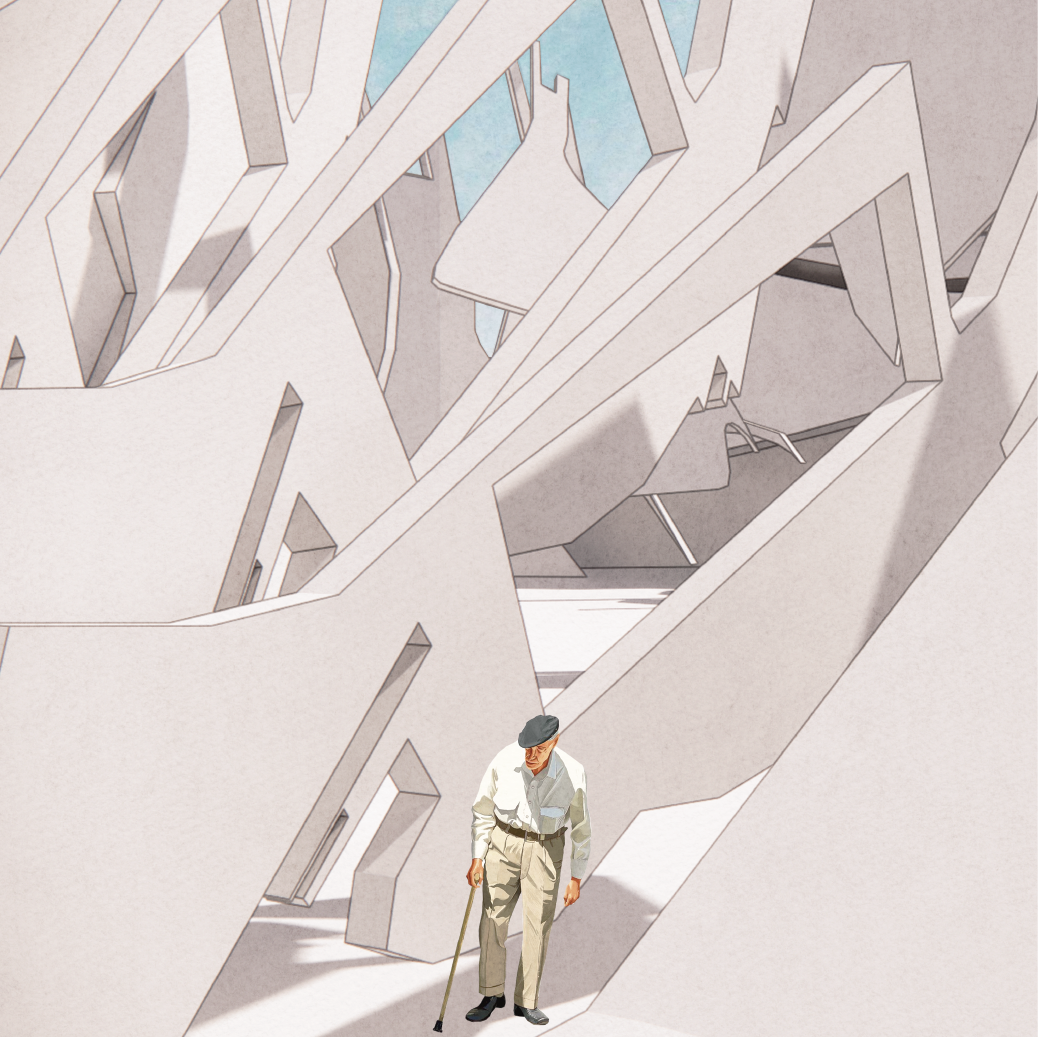
Fragmentation, interlocking, compression, openings, and displacement allow the wall to acquire thickness. Movement begins to occur not simply beside the boundary, but within it.
THE BORDER
HONG KONG / SHENZHEN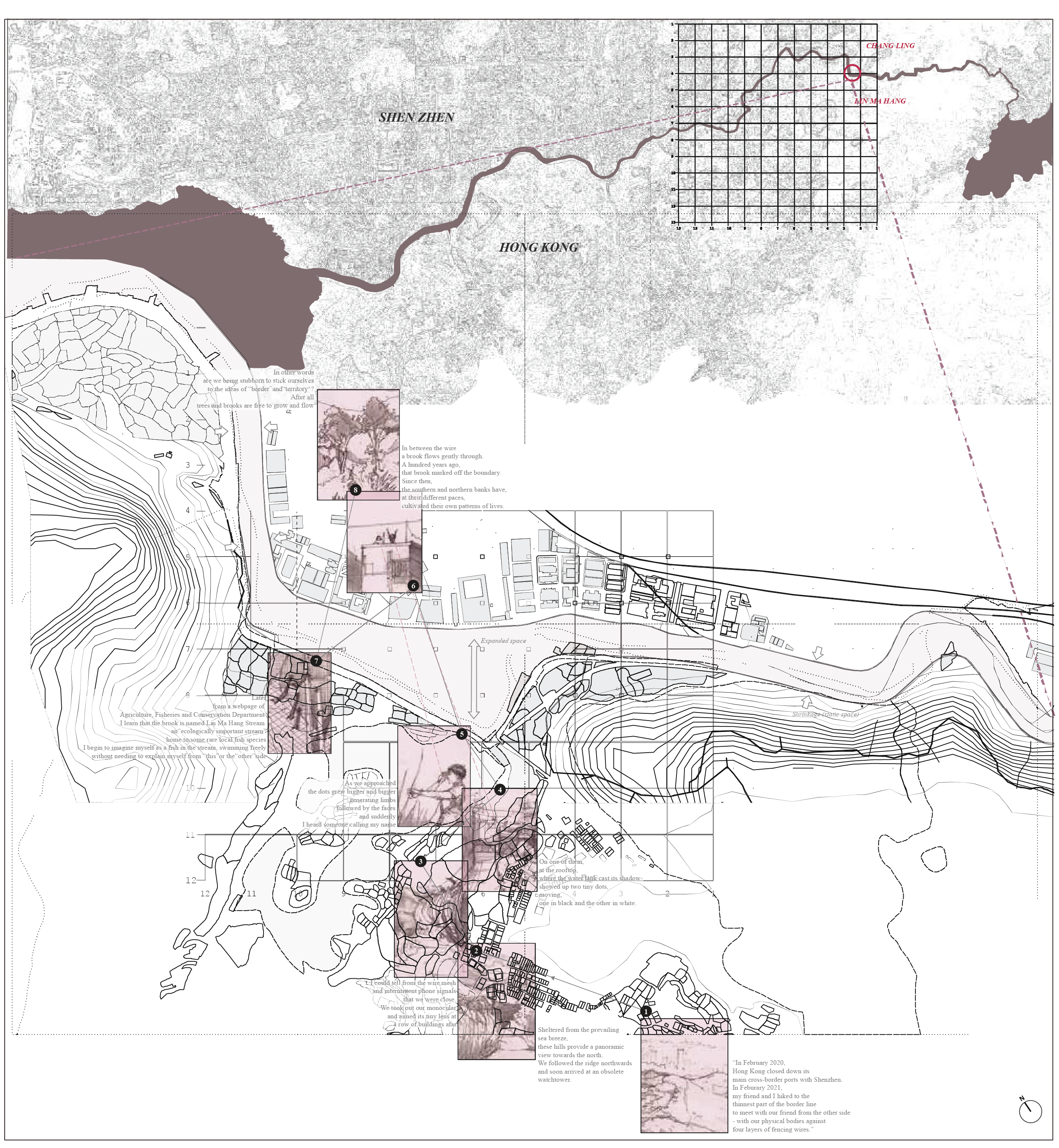
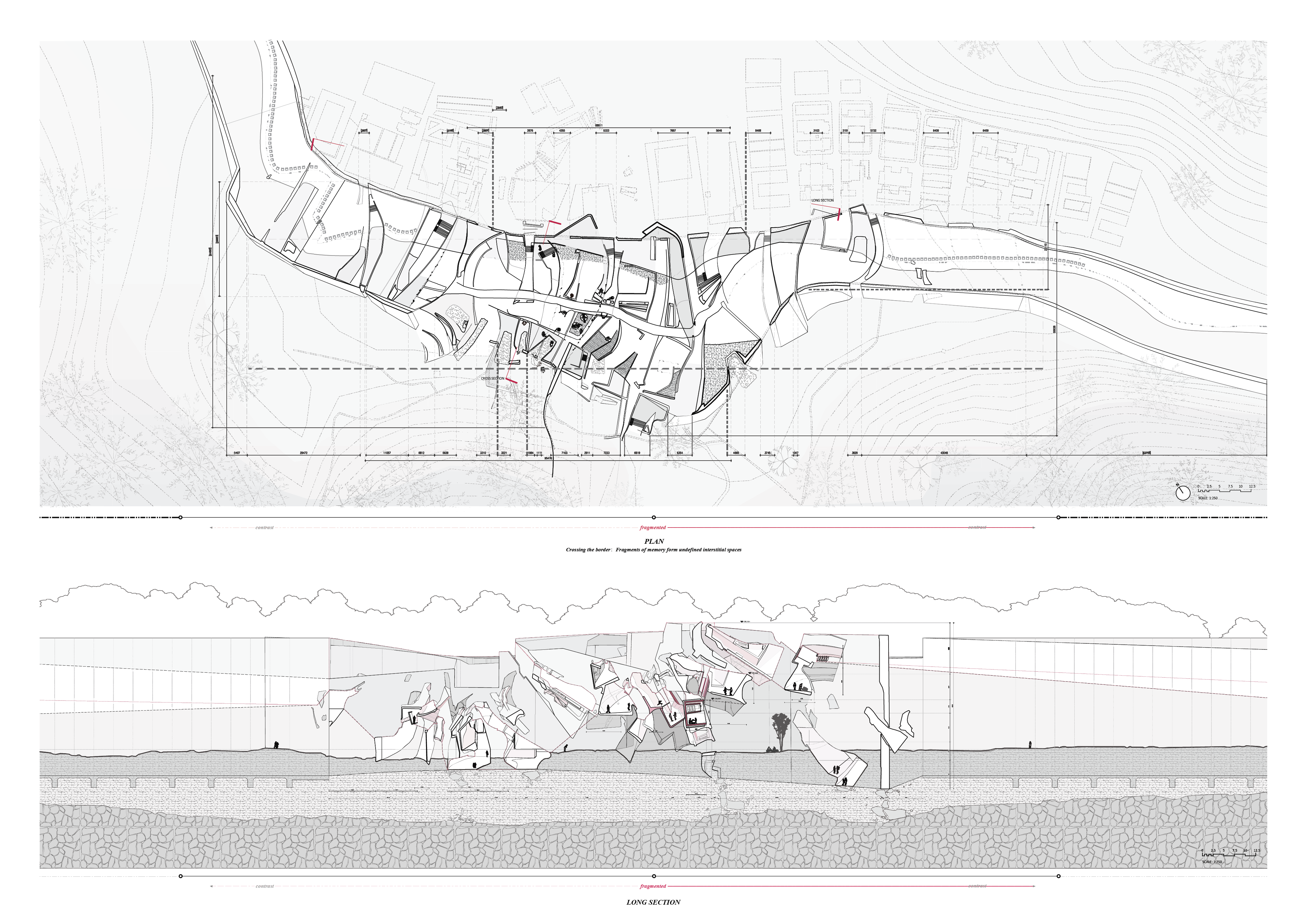
The Hong Kong–Shenzhen border becomes the physical condition through which this spatial research is tested.
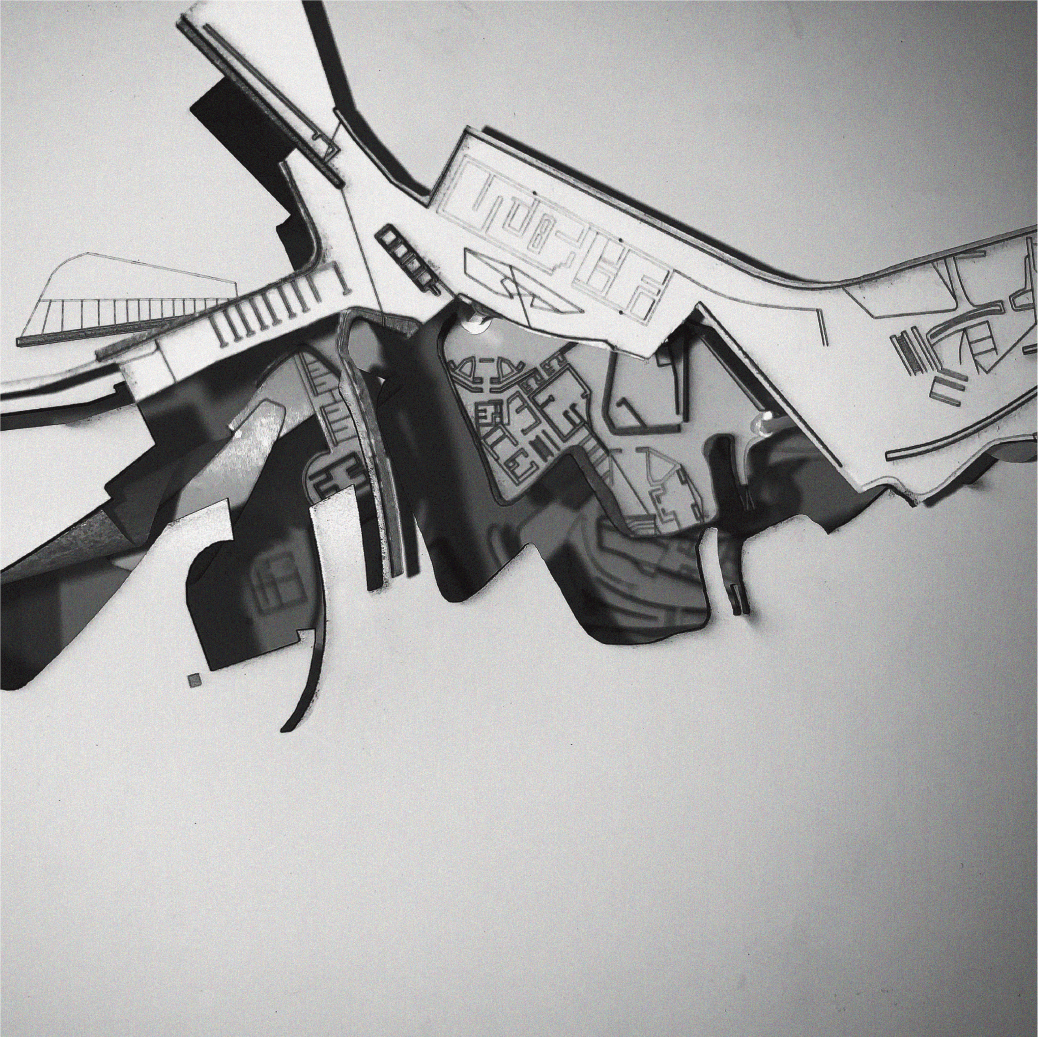
Between Lin Ma Hang and Chang Ling, roads, fences, vegetation, water, and administrative boundaries form a territory that is simultaneously adjacent and inaccessible. The border is experienced not as a single line, but as a sequence of distances, obstacles, views, and moments of proximity.
Four layers of barbed wire become the project's point of departure — transforming an infrastructure of separation into a spatial record of cross-border encounter.
NATURAL CONTINUITY
CONSTRUCTED SEPARATION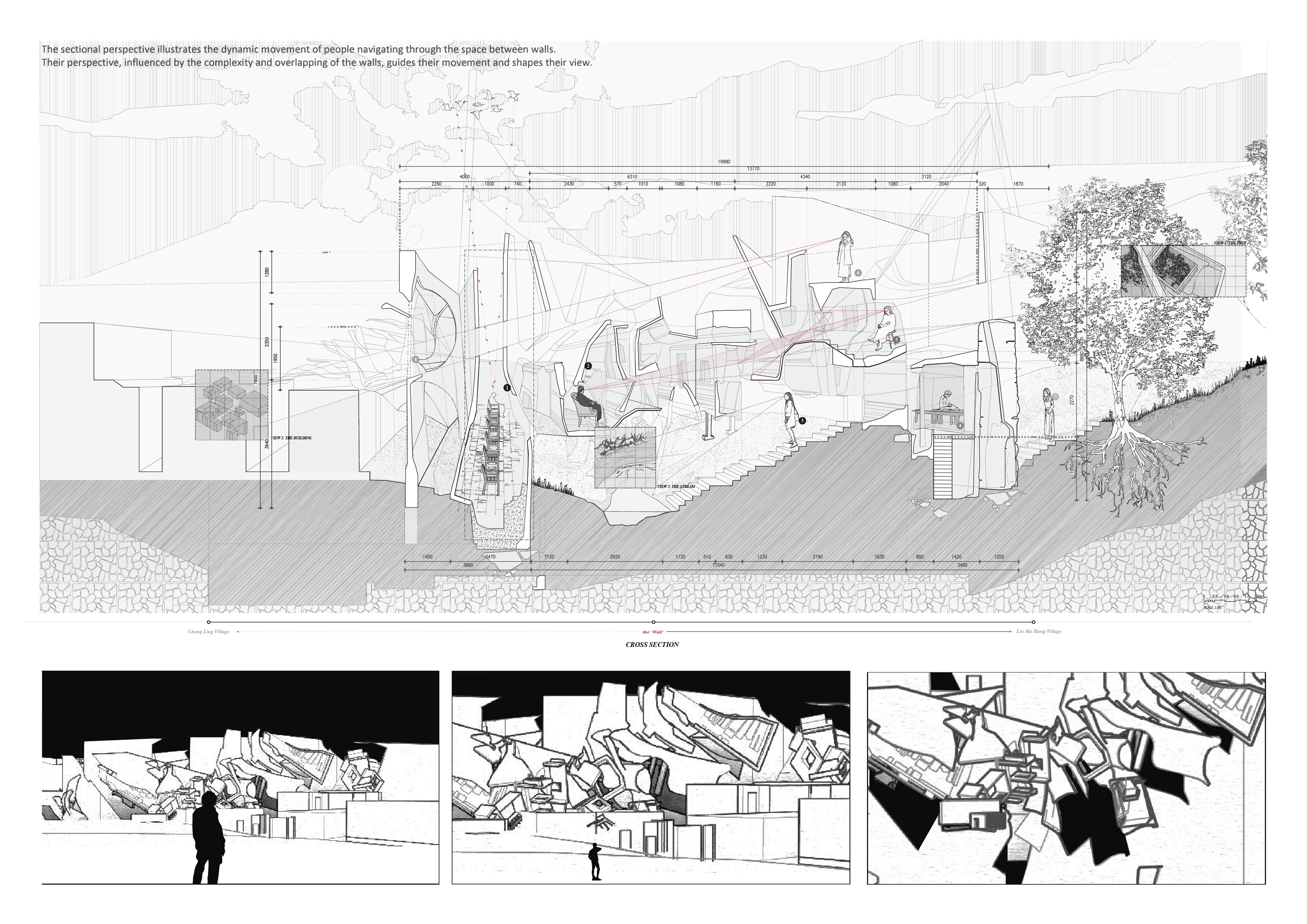
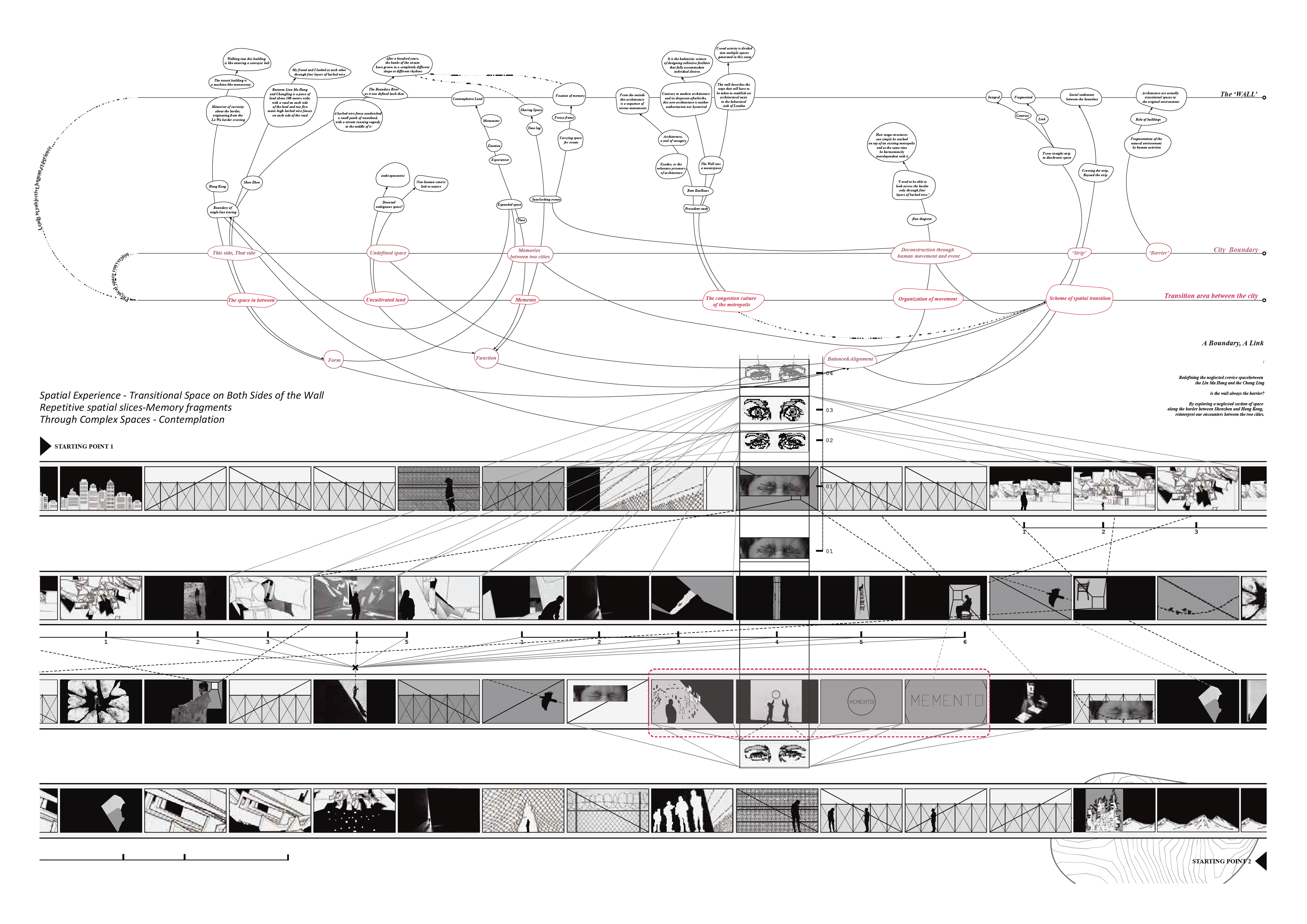
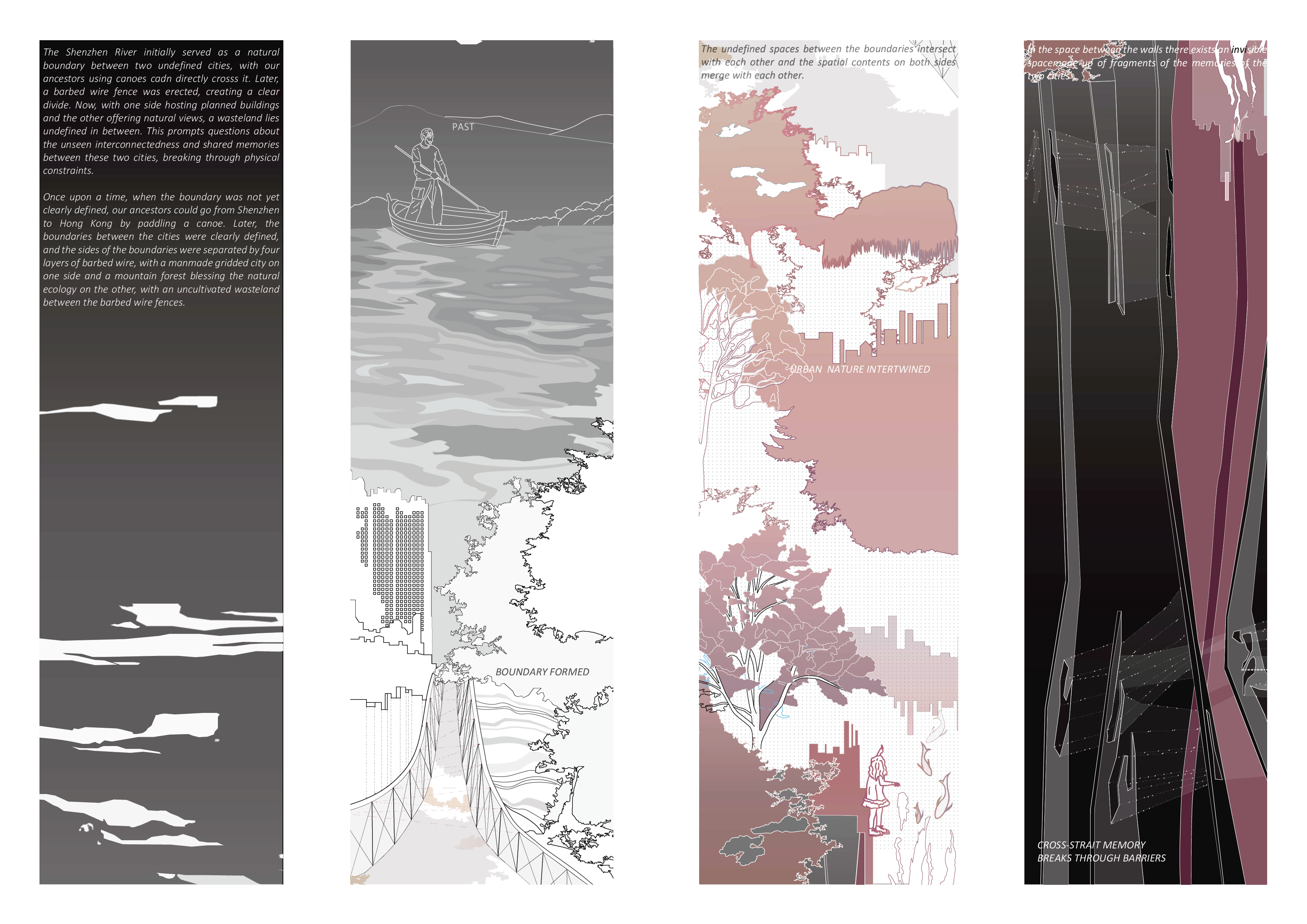
While political and infrastructural boundaries divide the territory, the landscape continues across them.
Water, topography, and vegetation move through a geography separated by roads, fences, and administrative lines. This contradiction between natural continuity and constructed separation becomes another layer of the project.
TIME AS A SPATIAL OPERATION
SEQUENCE / ENCOUNTER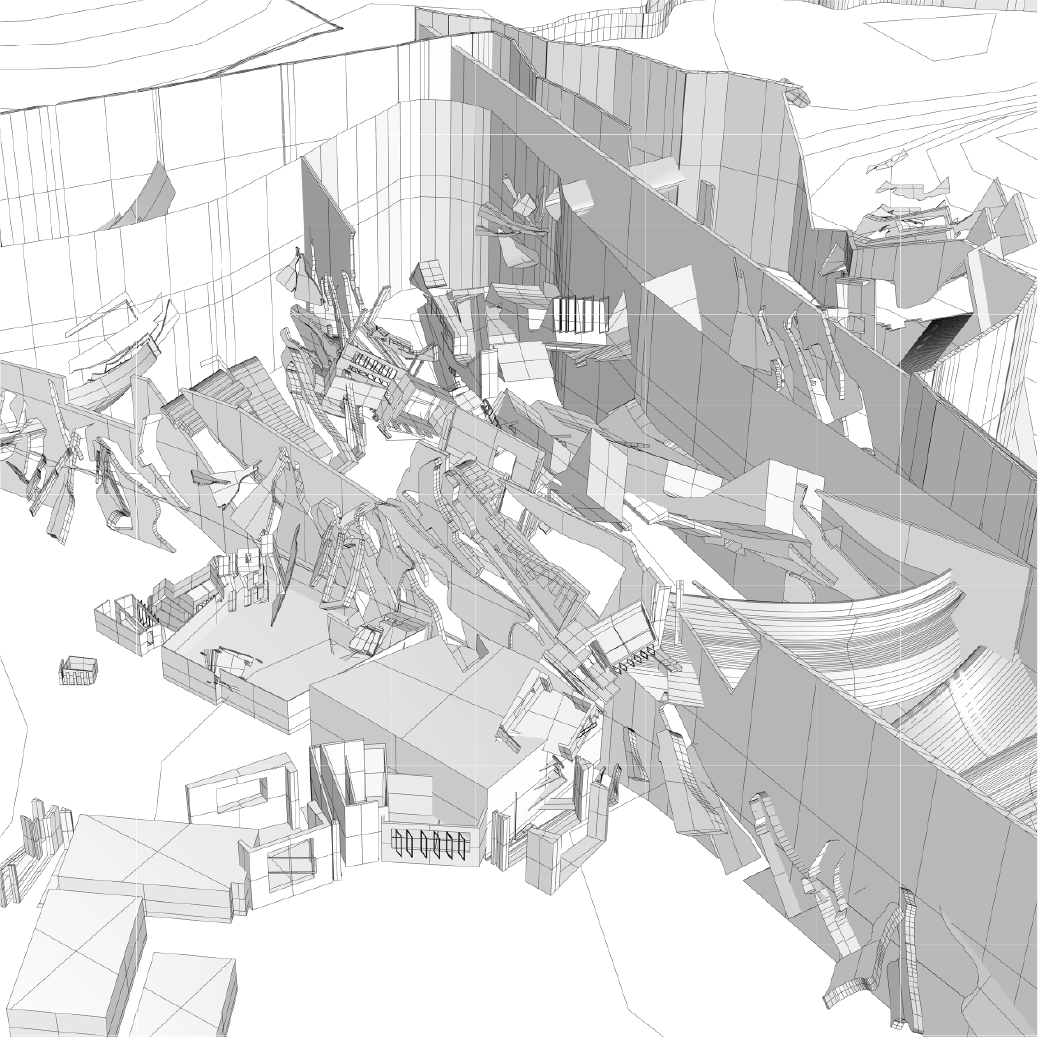
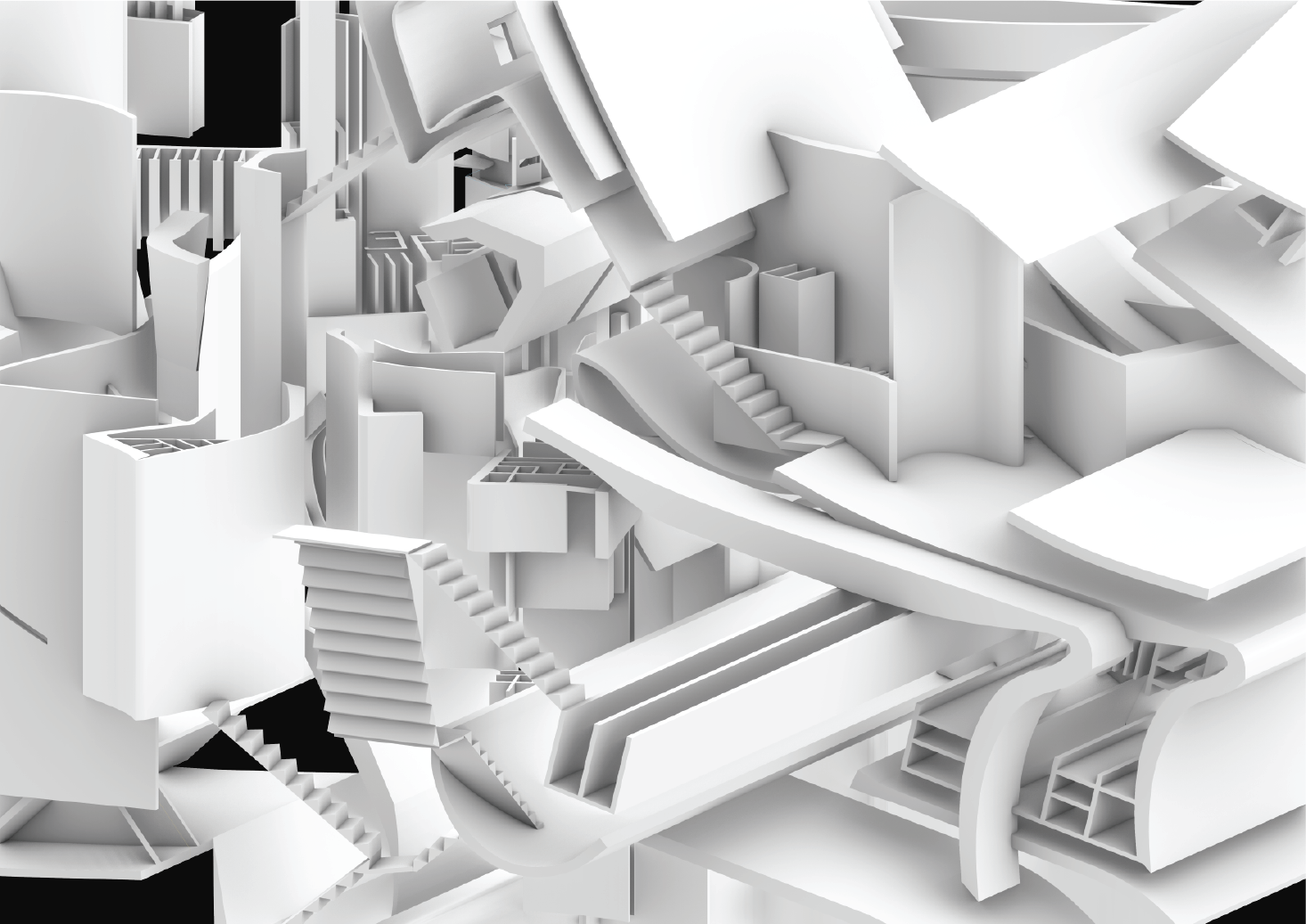
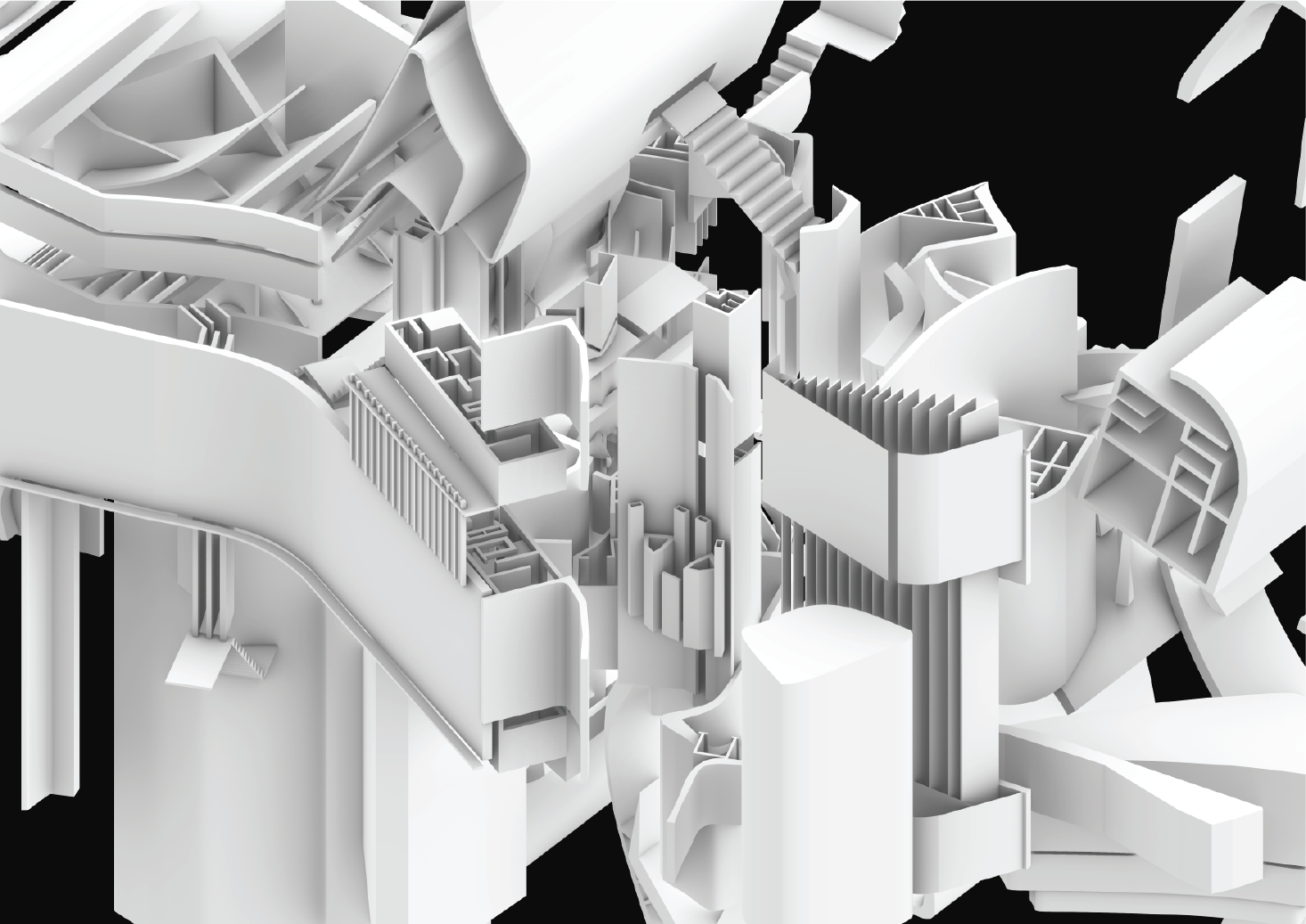
The linear border is transformed into a diachronic spatial sequence.
Repetitive slices, overlapping walls, compressed passages, openings, and fragmented spaces produce changing degrees of separation and encounter. Rather than revealing the project at once, the architecture unfolds through movement.
Space is continuously concealed and rediscovered, allowing different moments to coexist like fragments of memory.

SPATIAL EXPERIENCE
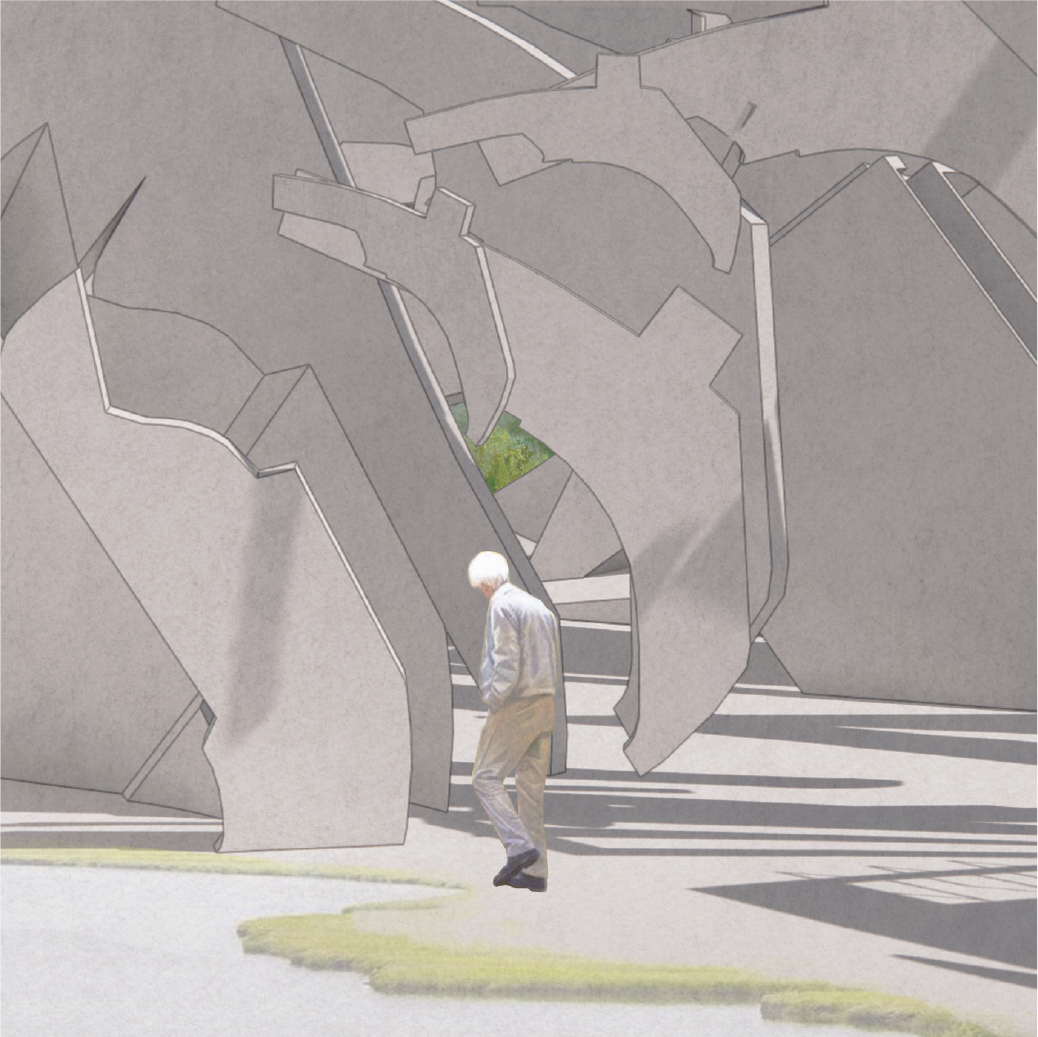
BODY / WALL / LIGHTAs the body moves through the reconstructed boundary, separation becomes an experience of compression, exposure, interruption, and encounter.
MEMENTO
The four layers of fencing are ultimately reinterpreted as a memento — a spatial record of a particular cross-border encounter and the identities held between two places.
By introducing time into the experience of the wall, the project transforms the boundary from a line that simply divides into a space that can also preserve, connect, and remember.
A boundary becomes a place where separation itself can be remembered.